Our Associate Director, Kalautie S. JangDhari, has accepted a position as the Medical Center Director of the West Texas Veterans Health Care System effective December 11,2016. As many of you know, Ms. JangDhari has been serving as the Interim Director at West Texas since November 2015. Ivan Itebejac our Chief of Pharmacy has been our Acting Associate Director and will remain in this position until we hire a new Associate Director.
Also you may have seen the story about the Orlando VA in the news related to a story that ran in USA Today. Strategic Analytics for Improvement and Learning (SAIL) is an internal guide to identify and focus on areas for improvement. We use quarterly SAIL data to ensure that we have a comprehensive assessment of all aspects of health care services.
The article in USA Today sites older data but our recent SAIL metrics show a significant improvement in individual metrics as well as a change in our rating to a 4 Star in FY16 QTR3 (this is a 5 star program). Many program efforts have contributed to our rating increase. This includes addressing access concerns with a variety of modalities, such as direct scheduling in our audiology and optometry clinics, our 24 hour Urgent Care Center, and increasing same day access.
We have also focused on preventive health measures, including the recent development of a clinic for complex heart failure patients who require frequent monitoring, medication adjustments, and hospitalizations. The Orlando VA Medical Center was the first VA entity in Florida to insert a Cardio MEMS device to support our care of patients with these special cardiac needs.
This year’s addition of acute care hospital beds serve our Veterans well while positively impacting our SAIL measures as we direct attention to keeping patients safe from infections and other harm. The plan to incrementally phase in active hospital beds is showing success even in the limited inpatient hospital data we currently have, reflecting lower mortality rates, fewer central line, urinary catheter, and MRSA infections, and shorter than average lengths of stay.
~ Heather Frebe
Public Affairs Officer, Orlando VA Medical Center
In accordance with United States Code Title 4, Chapter 1, Section 7(m), the president of the United States has issued a proclamation for the United States Flag to be displayed at half-staff to honor the memory of former NASA astronaut and Senator John Glenn beginning today and continuing until sunset on the day of interment .
In accordance with United States Code Title 36, Chapter 1, Section 129, the president of the United States is requested to issue a proclamation (per Flag Code section 7(m)) for the United States Flag to be displayed at half-staff for the entire day (sunrise to sunset) for National Pearl Harbor Remembrance Day, Wednesday, December 7.
When issued, the proclamation will be found on the White House website, it can be read by clicking here.
American Legion supports flag-desecration penalty, as decided by Congress, after amendment
WASHINGTON, Nov. 30, 2016 — The American Legion supports President-elect Donald Trump’s position that there should be some penalty for U.S. flag desecration, which would be decided by Congress if it chooses to enact such legislation, after the flag-protection constitutional amendment is ratified.
“In our campaign to restore the power of Congress to protect the American flag – a power taken away by a 5-4 Supreme Court decision – we’ve been told that no one burns the flag anymore,” said Richard Parker, Harvard law professor and chairman of the Citizens Flag Alliance. In fact, says Parker, flag desecration occurs on a frequent basis nationwide.
Parker is available to speak with reporters about flag protection. Those interested should contact American Legion national media liaison Stacy Gault at 202-705-8319 or sgault@legion.org.
Flag protection has been a cornerstone of The American Legion since its founding. The organization held the first Flag Conference in 1923 that laid the groundwork for U.S. Flag Code, which still provides guidelines for flag respect.
In June 1990, the Supreme Court upheld that the Flag Protection Act was unconstitutional. Subsequently, The American Legion and other groups formed the Citizens Flag Alliance, which now includes more than 140 organizations campaigning together an effort to pass a flag-protection amendment.
The Citizens Flag Alliance has pushed legislation in nearly every session of Congress since 1990 stating, “Congress shall have power to prohibit the physical desecration of the flag of the United States.”
The American Legion is the largest wartime veterans service organization with 2.2 million members in more than 13,000 posts in communities worldwide. The Legion, established by an act of Congress in 1919, was instrumental in creation of the Department of Veterans Affairs and passage of the GI Bill.
Veterans and Family Members:
Starting January 7, 2016, join the Bay Pines VA and National Alliance on Mental Illness (NAMI) every Saturday from 9:00 a.m. – 11:30 a.m. for the NAMI Family-to-Family program. The meetings will take place in building 1, room B214 at the C.W. Bill Young VA Medical Center.
The program is offered at no cost and is intended to educate participants on how to support a loved one with mental illness and or substance abuse conditions.
WASHINGTON, Nov. 29, 2016 — The American Legion will host a meeting with President-elect Donald Trump’s transition team and representatives from nearly 30 other veterans service organizations Thursday at 8 a.m. According to the transition team, the veteran-focused meeting is the first between Trump’s team and any outside organization.
Throughout his campaign President-elect Trump identified veterans’ issues as among his top priorities and the purpose of the meeting is for his staff to hear the questions and concerns of the veterans service organizations.
Directly following the meeting at the American Legion Headquarters, 1608 K St., NW, Washington, D.C., representatives from veterans organizations will offer their remarks during a press conference and be available for individual interviews.
To attend the press conference, please contact the American Legion Media Relations Office for press credentials by 4 p.m., Wednesday, Nov. 30.
The American Legion is the largest wartime veterans service organization with 2.2 million members in more than 13,000 posts in communities across America. The Legion, established by an act of Congress in 1919, was instrumental in getting the original GI Bill through Congress and the creation of the Department of Veterans Affairs.
Media Contact: Stacy Gault, Assistant Media Relations Manager, 202-705-8319, sgault@legion.org
The American Legion, Department of Florida 2016 Fall Conference kicked off November 18th – 20th. The event was held at the Hilton, Walt Disney World Resort in Lake Buena Vista, FL, where guests were greeted with cookies and a friendly smile upon check-in.
We estimate that more than 500 legionnaires attended this year’s Department Fall Conference, a great turn out and show of support. Thank you to all who were in attendance.
Headquarters was stationed in the hotel’s South Ballroom offering Department Emblem Sales, Membership assistance, Program Information, General Information, Photo Sessions, Project: VetRelief table and new additions of “Legion Online” and Centennial History show case. “Legion Online” featured laptops which guests could utilize to view the Department website, National website and MyLegion, with staff members on hand to offer assistance. The Centennial History show case featured historical relics from our Legion history. Last minute tickets sales for the 2016 Fall Raffle were also sold, along with discounted parking vouchers. Our friendly and dedicated Department staff and volunteers were eager to help Legionnaires with their Legion needs and questions.
During this Conference, Service Officer School trained 57 new Service Officers to serve our communities. Many classes such as Legion Institute, Post Training, Officer Training, Membership Training, etc. were also in high attendance.
General Session was held Saturday and kicked off with Post 286 Color Guard’s Presentation of Colors. We took pause to honor our POW-MIA and five lost Legionnaires this year: Rene Stachelrodt Jr., Past Dept Scholarship Chairman; Ed Miller, Past Southern Area Commander; Cauleen Dolan, Past 9th District Commander; French Shannon, Past 9th District Commander, and Charles Johann, Past 1st District Commander.
During the opening ceremonies, Department Commander, Department Adjutant and several other Department Officers entered sporting kilts and leprechaun attire in good spirit with Commander Joe Magee’s Irish-American heritage. Many laughs were had watching these well-respected men struggle with skirt kilt etiquette. Membership Director, Irene Graham also made a splash with leprechaun attire while assisting Jerry Brandt during the Membership Awards portion of the program.
National Judge Advocate, Phillip Onderdonk, joined us in a short and spirited speech as a special guest speaker. Wendy Jo Bost, Public Service Administrator at the Orange County Library System and Mimi Coenen, Chief Operations Officer at CareerSource of Central Florida also gave a heartfelt address and shared a short video on a joint program they have implemented with our veterans, military personnel and our youth. The Son’s of the American Legion and Auxiliary also stopped by for a quick hello and special guests of their own.
Dennis Boland, NEC, presented this year’s Child Welfare Awards. Bronze Plaques/Emblems for donations ranging from $500 to $749 were awarded to: District 13, Tampa Bay Post 152, Tequesta Post 271, Key West Post, Palmetto Post 309 and Fort Pierce Post 40. Gold Plaques/Emblems for donations exceeding $1,000 were awarded to: Largo Post 119, Spring Hill Post 186, Dunedin Post 275, Belleview Post 284, Lehigh Acres Post 323, Lady Lake Post 347, Tampa Post 5 and the Department of Florida. Eunice Butts and Dianne Boland were each presented with the 1 Diamond CWF Lapel Pin and Dennis R Boland was presented with the 5 Diamond CWF Lapel Pin. Department of Florida received: the Excellence Award; U.S. Udie Grant Award for most donations by the Florida legion Family in the amount of $86,784.33; Garland Murphy Award for Legion Department contributing the most donations to the CWF. PDC Jim Ramos was awarded a Diamond Lapel Pin.
Department Adjutant Mike McDaniel followed, delivering a brief report on Department business, and sharing an inspirational piece of our history and the importance of The American Legion. Our Candidates then presented a brief speech on why they would best serve our Department. A list of these candidates and their endorsements can be found on our department website: https://www.floridalegion.org/news-events/department-convention/endorsement-letters/.
After a brief break for lunch, the General Session resumed with the drawing of the 2016 Fall Raffle Winners, with the grand prize of $10,000 up for grabs. Those lucky winners are:
Grand Prize ($10,000) – Jamie Knapp of New Port Richey, FL
2nd Prize ($5,000) – Robert Wrobel of New Smyrna, FL
3rd Prize ($2,400) – Thomas Blaney of Jupiter, FL
4th Prize ($1,500) – Joseph Wagoner of Fort Pierce, FL
5th Prize ($1,000) – Richard Stewart of Gilford, NH
6th Prize ($1,000) – Howard Weingrow of Palm Beach Gardens, FL
7th Prize ($500) – Rudy Panganiban of Orlando, FL
8th Prize ($500) – Dwayne Enos of Jacksonville, FL
9th Prize ($500) – Stephen Benner of Leesburg, FL
10th Prize ($500) – Florenda Nicoloff of Melbourne, FL
Following reports from our Program and Committee Reports, Department Membership Chairman, Jerry Brandt, presented numerous posts with awards for meeting/exceeding their membership goals. Membership awarded 117 posts for meeting the 55% Goal, 101 whom met 60% Goal, 64 whom met 70% Goal, 10 posts whom met the 100% Goal. Also among Membership Awards were the Pioneer Awards, awarded to Edward Butcherine, Leo Kiffner, Gary Barton, Bobbie Jo Dino, Bob Deutsch and Thomas Listy. A warm welcome to our newest Post 410 in Rochledge, FL.
Membership was an important focus of this General Session as numbers have been on a decline over the last few years, due primarily to an aging demographic. Posts were encouraged to continue recruiting efforts and find new ways to attract members and appeal to the younger demographic. The American Legion is a legacy that we hope to pass from generation to generation, so long as there is an America. Increasing communication efforts among Posts, Department, Officers and Chairman was also an area where improvement was encouraged.
The General Session closed with final remarks from Commander Joe Magee and closing ceremonies.
Saturday’s events closed with the President & Commander’s Banquet that evening. Sunday concluded the Fall Conference, with a Religious Service that morning and a Department Executive Committee Meeting immediately following.
Overall, the 2016 Fall Conference was a great success. The Conference was well-organized and ran fairly, smoothly, although there were a couple of unforeseen hitches along the way. We sincerely apologize for the last-minute change of class locations to the Palm Building, which caused some confusion. This was due to an error by the hotel, in which they profusely apologized for, and treated our guest with an endless cookie buffet, enjoyed by many in the Headquarter’s Ballroom. This was the final year for Department events at this hotel, unrelated to this instance. Future Fall Conferences will be held at the Renaissance SeaWorld Orlando and Conventions will be held at the Marriot Orlando World Center.
We just concluded another successful Fall Conference, thank you to all who were in attendance. It is with great pleasure we announce the following winners for the 2016 Fall Raffle:
1st Jamie Knapp New Port Richey, FL $10,000
2nd Robert Wrobel New Smyrna, FL $5,000
3rd Thomas Blaney Jupiter, FL $2,500
4th Joseph Wagoner Fort Pierce, FL $1,500
5th Richard Stewart Gilford, NH $1,000
6th Howard Weingrow Palm Beach Gardens, FL $1,000
7th Rudy Panganiban Orlando, FL $500
8th Dwayne Enos Jacksonville, FL $500
9th Stephen Benner Leesburg, FL $500
10th Florenda Nicoloff Melbourne, FL $500
Congratulations to this year’s raffle winners! Thank you for playing.
We hope you are busy preparing to join us next week. We wanted to take a moment to encourage you to participate in our Membership Drive Raffle to be held at Fall Conference, November 18-20, 2016.
Membership is what fuels our organization and our posts are the ones who recruit and steward those members.
To thank you for your hard work and dedication we will offer a special incentive at Fall Conference.
For each membership card your post brings in we will give your post a chance to win one of three prizes. The more cards you deliver us at Fall Conference, the greater your chances!
·First Prize $250
·Second Prize $150
·Third Prize $100
Rules:
Fall conference will be held at the Hilton Orlando Lake Buena Vista at Walt Disney World Resort, November 18 – 20, 2016. For every paid membership card turned, while in attendance of Fall Conference, a ticket will be entered into the drawing. All membership cards must be turned in by 5:00 PM on Friday, November 18, 2016 to be eligible to win. Drawing will be held during General session on Saturday, November 19, 2016, at 9:00 AM. An authorized post representative must be present during the drawing, and must provide corresponding winning ticket number to claim prize. First ticket drawn will be awarded 1st Prize of $250, second ticket drawn will be awarded 2nd Prize of $150 and third ticket drawn will be awarded 3rd Prize of $100. For complete details and or questions, please contact Irene Graham (igraham@floridalegion.org), Membership Director at the Florida Department Headquarters.
We have begun our 2017 National Cemetery Memorial Flag Placement Fundraising with the launch of our 2017 Memorial Day Shirt. You can still order it though our old site from the link below. All donations of $125 will receive a free shirt (Please include your size on the form). Shirts are ready for immediate shipment..plenty of time for the holidays..
HERE’S WHAT YOUR DONATION WILL HELP PURCHASE:
$25 – 55 FLAGS
$50 – 111 FLAGS
$100 – 222 FLAGS
$125- 277 FLAGS
$500 – 1111 FLAGS
The shirt you purchase will benefit your local National Cemetery Flag Placement. The placements for 2017 are:
DALLAS-FORT WORTH NATIONAL CEMETERY
HOUSTON NATIONAL CEMETERY
FLORIDA NATIONAL CEMETERY
SARASOTA NATIONAL CEMETERY
SOUTH FLORIDA NATIONAL CEMETERY
BLACK HILLS NATIONAL CEMETERY
FORT MEADE NATIONAL CEMETERY
As always once we reach our financial goal for 2017 we stop all further request. I along with a lot of you probably don’t like getting hit upon by the same group all year long. This has always been and will continue to be our policy.
Registration for volunteers AT DFW National, Black Hills National and Fort Meade National will begin sometime in October with the launch of our new website. You will receive an email when registration opens.
HOUSTON VOLUNTEERS–NOVEMBER 1, 2016
FLORIDA NATIONAL VOLUNTEERS–DECEMBER 1, 2016
SARASOTA NATIONAL VOLUNTEERS–JANUARY 1, 2017
SOUTH FLORIDA NATIONAL VOLUNTEERS–JANUARY 1, 2017
I hope you like next years shirt. The Royal Blue is a new color for us.
Thank you for your continued support and Patriotism,
Morrison R. (Bob) Fussner II
Founder & President Flags For Fallen Vets, Inc. (817) 798-9414
The following information is pertaining to the National Emergency Fund. Please follow the below eligibility and application requirements:
If you have any questions or are in need of support, please call your The American Legion Department Headquarter, we will be prepared to provide support to any Legionnaires or Sons of the American Legion.
Please call Bruce Comer, Rachel Casselberry or Jennifer Cooper for assistance. 407-295-2631
Eligibility
Eligibility open to Legionnaires and Sons of The American Legion members (up to $3,000) Legion Posts (up to $10,000).
Applicant must have been displaced from their primary residence due to a declared natural disaster and provide proof of out-of-pocket expenses.
Not meant to replace or repair items, only to meet most immediate needs (i.e., temporary housing, food, water, clothing, diapers, etc.)
Does not cover insurance compensation or monetary losses from a business, structures on your property (barns, tool sheds, etc.,) equipment or vehicles.
Membership must be active at time of disaster and the time of application.
Application requirements
Application must be received within 90 days of disaster.
Disaster must be a “declared” natural disaster for Legion Family members.
Supporting data (photos, receipts, repair estimates, etc.) should be included if at all possible or statements (testimony) from post/district/department officers attesting to damages.
Only one grant per household.
Post grants must derive from a declared natural disaster and substantiating documentation must provide that The American Legion post will cease to perform the duties and activities in the community due to losses sustained.
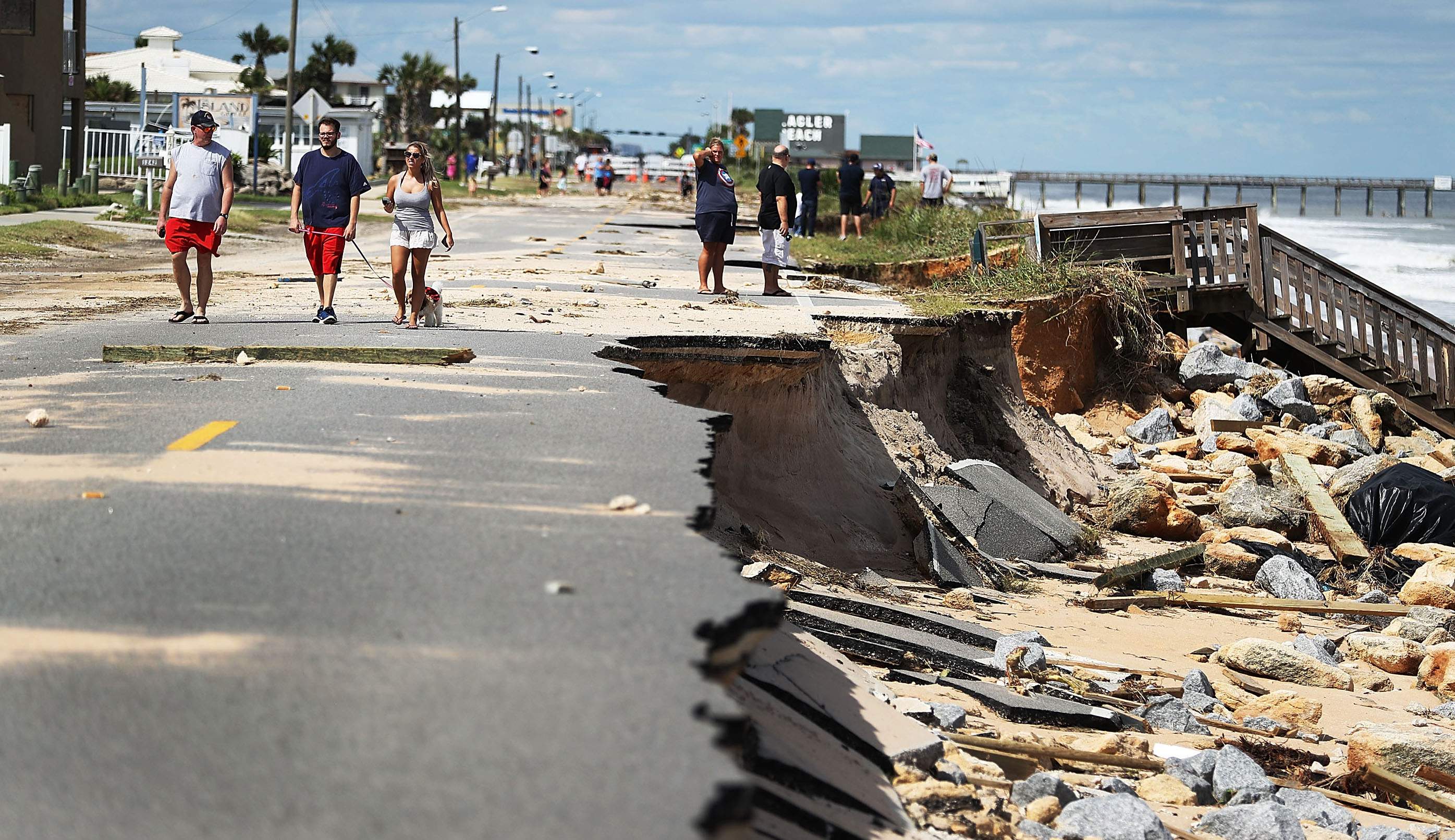
Due to Hurricane Matthew storm projections the Orlando VA Medical Center is closing its Viera and Daytona Beach-based VA clinics effective Thursday, Oct. 6 through Saturday, Oct. 8.
The closure means VA medical services will not be available at those locations until Tuesday, Oct. 11, due to the Columbus Day federal holiday Oct. 10. The decision also closes the Port Orange Psychosocial Recovery & Rehabilitation Center (PRRC) on South Clyde Morris Blvd.
The Orange City VA Clinic will close on Friday, Oct. 7 and remain closed until Tuesday, Oct. 11.
The closures will occur as an abundance of caution in preparing for the potential effects of Hurricane Matthew. Veterans needing emergency medical services are encouraged to visit the Orlando VAMC’s Urgent Care facility at 13800 Veterans Way in Lake Nona. The facility is open 24 hours, 7 days a week.
For more information contact the Orlando VAMC Public Affairs office at (407) 631-4436, or via e-mail at vhaorlpublicaffairs@va.gov
You can use the link below to receive mobile phone & email alerts from us in the event of a hurricane or emergency:
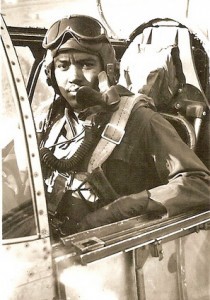
By Redtail.org ~ The CAF Red Tail Squadron has many special relationships with original Tuskegee Airmen, and we absolutely treasure them. These American heroes are unique, continuing to inspire us as much today as when they fought fascism abroad and racism back home in the era of WWII. We are honored to stand beside these great role models at many of our outreach events around the country. Leo Gray, an original Tuskegee Airmen and pilot, continues to share his experience with our audiences, inspiring the next generation to RISE ABOVE.
Gray, born in Boston, volunteered for service in 1943. He went to flight school at Tuskegee Army Airfield where he qualified for single-engine fighters. He was then assigned to Ramitelli, Italy where he flew 15 combat missions in the P-51 Mustang, logging 750 flight hours. He served 3 years and seven months active duty, and remained in the United States Air Force Reserves until 1984. He retired after 41 years of service with the rank of Lieutenant Colonel.
“The Tuskegee Airmen are a classic example of overcoming adversity, and people in our country should know about it,” said Gray. “It is worthwhile for everyone.”
During his military career, Gray was awarded the Air Medal with one Oak Leaf Cluster, a Presidential Unit Citation and the Mediterranean Theatre of Operation Ribbon with three Battle Stars. The Tuskegee Airmen collectively were awarded the Congressional Gold Medal by Congress in 2007 to recognize their “unique military record that inspired revolutionary reform in the Armed Forces.”
After the war, Gray earned a Bachelor of Science at the University of Massachusetts and a Masters degree at the University of Nebraska, both in agricultural economics. For 30 years, Gray coordinated research for the USDA. He credits his military service as the catalyst that helped his civilian career by giving him the skill and perseverance to be successful.
Gray has played a leading role in the Tuskegee Airmen, Inc. organization, serving as president of the Miami and East Coast chapters. He also helped to form a new chapter in Walterboro, South Carolina, the location of advanced combat training for Tuskegee-trained pilots before being shipped overseas to combat from 1943 to 1945.
He is also a dedicated member of the Boys & Girls Club of America – of which he was a member himself in his youth – and is a co-founder of the organization’s Ionosphere Club in Broward County, Florida. This unique group gives members the opportunity to learn about all aspects of flying, including science and mechanics.
“There are many young people, especially in urban areas, who have not been exposed to aviation,” remarks Gray. “They need to understand what’s available for them. Aviation is a field with many openings. Pilots and support personnel are in demand because of many retirements. People need to understand the impact that aviation has on different areas of the country.”
Gray has been gracious enough to help make our outreach visits even more impactful and inspiring by appearing at several of our events. For example, earlier this year, Gray joined us in Florida to speak directly to school groups about the history and legacy of the Tuskegee Airmen, and how students can utilize the Squadron’s Six Principles in their own lives – Aim High, Believe In Yourself, Use Your Brain, Be Ready To Go, Never Quit, Expect to Win.
“The CAF Red Tail Squadron is one of the few organizations that has a hands-on approach to opening peoples’ eyes to aviation and the history of the Tuskegee Airmen,” he says. “The RISE ABOVE Traveling Exhibit gives young people the opportunity to find out things that might never have been exposed to.”
Thanks to the ongoing hard work and perseverance of Tuskegee Airmen, including Lt Col (Ret) Gray, younger generations are learning not only about an important piece of American history, but about what grit, determination and strength of character really means.
The CAF Red Tail Squadron is a volunteer-driven organization dedicated to educating audiences across the country about the history and legacy of the Tuskegee Airmen, America’s first black military pilots and their support personnel. Learn more at www.redtail.org.
~~~~~~~~~~~~~~~~~~~~~~~~~~~~~~~~~~~~~
It is with deep regret we report the passing of Leo R. Gray, a beloved Charter Member of Post 365. Leo will be greatly missed and fondly remembered.
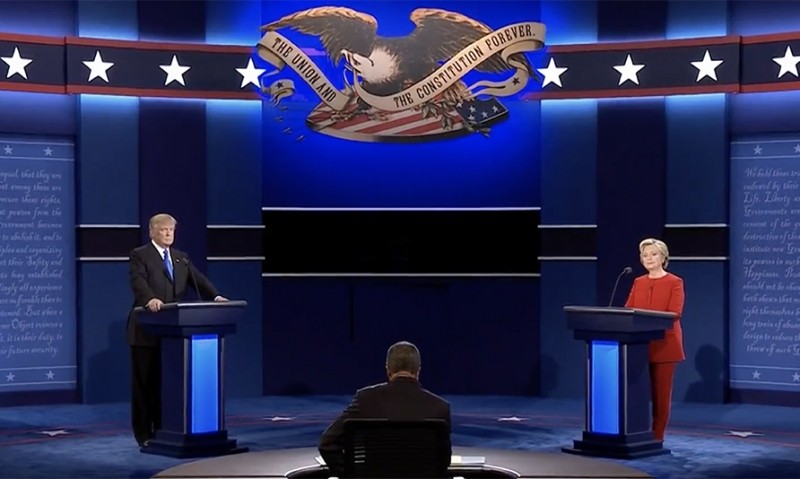
By Henry Howard ~ In their first face-to-face debate, presidential candidates Hillary Clinton and Donald Trump traded barbs and touted their experiences on jobs and the economy, tax cuts, race relations and other issues on Sept. 26.
Toward the end of the 90-minute nationally televised debate, the Republican and Democratic nominees turned to the Islamic State and national security.
Clinton called for more airstrikes on ISIS and to work with other nations to eliminate the militant group. “We have to make this the top priority and take out their top leadership,” she said. “We have to take out ISIS and do everything we can to take them out online.”
Trump also vowed to take out the Islamic State. “The way President Obama and Secretary Clinton got out of Iraq was a disaster,” he said. “That’s why ISIS was formed.”
Through all the heated exchanges, neither candidate addressed issues facing our nation’s veterans such as health-care access, claims appeals and lack of lifetime electronic medical records.
“We are glad to see the candidates address national security issues,” American Legion National Commander Charles E. Schmidt said. “But at the same time, we need the next commander in chief to address real solutions to our most critical challenges as a nation. We’re hopeful that we will hear those in the upcoming debates.”
There are hundreds of thousands of veterans awaiting decisions on their claims appeals, Schmidt cited as an example. “The House has approved Legion-supported appeals modernization,” he said. “If that does not become law before the new president is sworn in and the new Congress seated, it must be a priority in 2017. We owe it to our veterans who deserve timely decisions on their health care. And the presidential candidates owe our constituents real solutions to their problems.”
The nominees also discussed cyber warfare and recent high-profile cases of hacking.
Clinton called cyber warfare one of the next major challenges facing the next president. “We are seeing cyberattacks coming from states, the most troubling of these is from Russia,” she said, noting that both government and private citizens’ records have been hacked. “I am deeply concerned about this. We will defend the citizens of this country and the Russians need to understand this.”
Trump insisted that it was unclear who conducted the cyberattacks. “We don’t know that it was Russia that broke into the files,” he said. “It could have been Russia. It could have been China. It could have been a 400-pound guy sitting on his couch. When you look at what ISIS is doing with the Internet, they are beating us at our own game. There are many things we have to do better and one of them is cyber.”
There will be two more presidential debates before the election in November.
TALLAHASSEE, Fla. – Today, Governor Rick Scott and the Florida Cabinet issued the following resolution recognizing Gold Star families.
Governor Rick Scott said, “Today, I am honored to recognize the gold star families whose loved ones made the ultimate sacrifice to defend our country and our freedoms. We can never fully express our gratitude for the selfless actions of our American heroes but we will continue to honor their service and bravery. Our thoughts and prayers are with the families of those fallen in service.”
The following gold star families were recognized:
Craig and Toni Gross, parents of Army Corporal Frank R. Gross, killed July 16, 2011. (Afghanistan)
Gary King, father and Porsche Knight, sister of Army Private First Class Brandon M. King, killed July 14, 2010. (Afghanistan)
Meredith McMackin, mother of Marine Corps Corporal Julian McMackin Woodall, killed May 22, 2007. (Iraq)
Alberta Simmons, mother of Army Master Sergeant Shawn E. Simmons, killed June 29, 2008. (Afghanistan)
R E S O L U T I O N
State of Florida
WHEREAS, Florida owes a lasting debt of gratitude to those who gave their lives in service to secure the blessings of liberty; and
WHEREAS, a debt of gratitude is also owed to our Gold Star Families: parents, spouses, siblings and children who have lost a loved one who made the greatest sacrifice of all in protecting our way of life; and
WHEREAS, these families once experienced the anxiety of watching their loved ones go off to military service, not knowing whether they would return; and
WHEREAS, these families will always feel the deep grief of losing that spouse, sibling, son or daughter in both combat and non-combat environments; and
WHEREAS, as Floridians today enjoy the peace and security our Nation and State have achieved through the sacrifices of American citizens, Florida’s Gold Star Families can take solace in knowing that their loved ones left all humanity a legacy of invaluable meaning; and
WHEREAS, in respect and recognition of the sacrifices our Gold Star Mothers have made, the United States Congress, by Senate Joint Resolution 115 on June 23, 1936, designated the last Sunday in September as “Gold Star Mother’s Day” and authorized and requested the President to issue a proclamation in observance of this day; and
WHEREAS, we recognize that not only mothers but families make sacrifices as spouses, siblings, sons, and daughters now join our Armed Forces and so we in Florida believe that it is the whole family who is due our unwavering support and admiration for the tremendous sacrifices made.
NOW THEREFORE, BE IT FURTHER RESOLVED that the Governor and Cabinet of the State of Florida do hereby proclaim the last Sunday in September each year as
GOLD STAR FAMILY DAY
in Florida and call upon communities across our State to honor all those families and join together in a fitting salute to our Gold Star Families. We also call upon local government officials to display the United States Flag on government buildings on this solemn day. We additionally urge Floridians to display the flag and to hold appropriate meetings in their homes, places of worship, or other suitable places, as public expression of the sympathy and respect that our State holds for its Gold Star Families.
IN TESTIMONY WHEREOF, the Governor and Cabinet of the State of Florida have hereunto subscribed their names and have caused the Official Seal of Florida to be hereunto affixed in the City of Tallahassee on this 20th day of September, 2016.
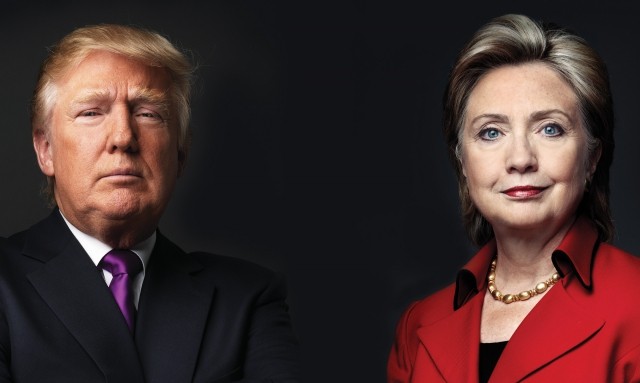
By Henry Howard ~ The 2016 election season has been characterized by its uniqueness, polarization, bravado and potential for history in the making, regardless of who moves into the White House in January. What’s been lost in most media coverage is an examination of where the presidential nominees of the two major political parties stand on the issues, particularly those of greatest interest to the nation’s largest wartime veterans organization. For those who run a political group, consider using political campaign text messaging systems to get your messages between colleagues much faster and without any problems.
The American Legion conducted exclusive one-on-one interviews with Democratic nominee Hillary Clinton and Republican nominee Donald Trump in August. (While some third-party candidates have received more support than in previous elections, The American Legion followed the lead of the presidential debate committee on inclusion of other candidates. At deadline, however, no third-party candidates had reached the threshold to be included in the debates and therefore are not in this question-and-answer coverage.)
The interviews with Clinton and Trump, which were conducted while both candidates visited Florida, focused on issues of importance to American Legion members, other veterans, U.S. servicemembers and their families. Both shared their views on VA health care, defense spending, border security and more.
Here are excerpts from the interviews:
Veterans have faced long wait times and other problems while trying to receive health care or benefits decisions at VA. What is your recommendation to solve this?
Clinton:I am outraged at the long waits and other scandals that emerged over the last several years that have really disadvantaged veterans and broken the bond that we should be treasuring between ourselves and our vets. I am going to do everything I can to accelerate efforts under way to fix problems in the system. I’m going to create a President’s Council for Veterans because we need that emphasis. I want to be sure we are fixing the problems, but not creating an opening for those who have advocated for the privatization of the VA health system. That would be a terrible mistake and would make access to treatment, particularly specialized treatment, even more difficult for a significant number of our vets.
I want to do a better job linking up DoD, TRICARE and VA. This remains a big stumbling block because people who leave the service often don’t even get their records, and if they do, it’s often disorganized. It’s not as seamless as it should be.
I take this as a high priority at the beginning of my presidency and will work on it every single day until we get it in as strong shape as possible.
Trump: Veterans have so many problems with VA. I’ve never seen anything like it. They are not being treated right. Their wait times – five, six, seven days, maybe even longer. Sometimes they don’t even get to see a doctor. The guiding principle of the Trump Veterans Plan is ensuring veterans have convenient and timely access to top-quality care. The veterans health system will remain a public system because it’s a public trust. But never again will we allow veterans to suffer or die waiting for care. One of the things we’re going to do is that if they can’t see a VA doctor, they are going to find a local doctor. It can be private – most likely it will be private – or they can go to a hospital outside that’s different from where they can’t get in or where they can’t go through the lines. This could be a public or private hospital, and we will pay the bills and take care of them. These are great people and we will take care of them properly.
Many servicemembers are returning from the current wars with PTSD, military sexual trauma (MST) and/or traumatic brain injury (TBI). If elected, what would you recommend DoD and/or VA do to address and improve treatment in these areas?
Trump: A recent VA comprehensive study placed the number of veterans who die by suicide at 20 per day. We must do better for those who suffer the invisible wounds of war. First, we must make sure that the VA Office of Suicide Prevention is staffed, resourced and placed on equal footing with its DoD counterpart. In addition, I will increase the number of mental health care professionals, and allow veterans to be able to see mental health care outside the VA if they so choose. We will also increase investments in researching, treating and diagnosing traumatic brain injury. This is a top priority for me.
Clinton: As a senator, I was on the Armed Services Committee and we were already recognizing that PTSD and TBI were the new injuries of these wars in ways that were qualitatively different from what we had seen before. The PTSD that we were seeing not only included direct combat experience but sexual assault.
We’ve made progress but not near enough. Therefore I want to invest heavily in the best techniques, doing a comprehensive landscaping of what is working. Different things will work for different people. Can we create profiles that will give us more guidance as to how to deal with these very serious problems?
I’m going to approach this like we would approach some terrible epidemic that was killing people, maiming people, because that’s the mentality I think we have to bring to this. We are losing 20 vets a day to suicide and a lot of them are just giving up. They feel such despair because they can’t get any help that really works to get them through the emotional trauma that they have suffered.
It’s physical, it’s emotional, it’s psychological, it’s spiritual, it’s cultural, and we need to treat it on all of those grounds and do a better job.
The armed forces are all suffering from cutbacks due to sequestration and budget reductions. How will your recommendations to Congress balance the need for a strong national defensewith the need for a budget that reflects the realities of today’s economy?
Clinton: I want to end sequestration, both on the defense and civilian side. I think it has been destructive to both. Clearly we know that on the defense side, there have been enough reports and investigations about how we’re falling behind in preparedness, and it’s unacceptable.
On the civilian side, we have shut labs that were making promising breakthroughs and treating Alzheimer’s, for example, and many other issues that have to be addressed, because of sequestration.
On the defense side, I am committed to a robust defense budget that will provide what we need to be prepared for the threats and adversaries we face today. Therefore, I want to get the best possible advice about what more we need to do to be prepared, and what it’s going to cost. We’re going to have a top-to-bottom review about what’s working (and) what’s not working, but I know we can’t meet the demands that we face without getting rid of sequestration.
Trump: First of all, we have no choice. It’s not like, “Oh, gee, we can just delay it.” President Obama has delayed it. We have fewer ships than we have had in decades. We have arms that are old and airplanes that are very old. We can’t even get parts anymore. They don’t make them anymore. We get parts from the plane graveyards.
Cuts should instead be made to wasteful domestic spending and bloated bureaucratic budgets. But it’s not a question of how we do it. We have no choice. These are very dangerous times, possibly as dangerous as we have ever had. We have a military that is depleted and we are going to take care of it.
The Islamic State is conducting terrorist attacks and inspiring others to commit violence worldwide. What’s your strategy to defeat ISIS?
Trump: We must bring all of our allies into the fold who share our goal of defeating and destroying ISIS. Instead of nation-building like in Libya that creates operating and breeding grounds, we must work with all nations that want to eliminate this scourge to destroy them.
This means aggressive military strikes. It also means we must improve our intelligence-gathering operations and make huge investments in this crucial arena. It means we must change our immigration policy to keep ISIS from attacking here. Working with our military commanders, we must give our servicemembers the resources, strategies and policies they need to get the job done. Our military goal is not to spread democracy worldwide but to defeat ISIS and destroy terrorist organizations.
Clinton: I believe strongly that we have to defeat them and destroy them. We’ve got to have a multi-pronged strategy.
First, we have to continue and intensify our efforts to drive them from the territory that they occupy in Syria and Iraq, and we’ve made progress. American-led airstrikes have really helped. Our training of the Iraqi army has taken back territory. Our use of special forces to partner with Arab and Kurdish fighters has also been promising.
We have to keep working on that. We can’t walk away from doing everything possible to destroy their headquarters in Raqqa, drive them out of Iraq and then destroy them in Syria.
That’s not enough because they are a sophisticated enemy. They are fighting us online as well as on the ground, and we’re not doing yet enough to combat and defeat them online. I am absolutely adamant that we need to get the best support we can from our tech companies and experts from Silicon Valley … (and) the Route 128 corridor in Massachusetts. Everybody needs to help us disrupt their sites, interfere with and end their recruitment and radicalization online.
We also have to have what I call an intelligence surge. There is not enough good sharing of the intelligence we have. We have seen that, unfortunately, in Europe, where ISIS has been successful in launching attacks. There is not the kind of seamless sharing of intelligence even across borders in Europe and between countries and the United States.
China is a threat with its terraforming program and involvement in cyber attacks. Given our debt situation with China, how should the United States strategically handle this relationship?
Clinton: It became apparent (to me) as secretary of state how aggressive the Chinese intended to be in making territorial claims in the South China Sea. I was the first to confront them and try to put together a strategy that will contain them and prevent them from not only intimidating their neighbors but also interfering with the free flow of commerce and international laws of navigation.
We strongly supported the Philippines in bringing their international legal challenge to China’s claims, and I was quite surprised at how far the decision went in repudiating China. We’ve got a strong legal basis, which we did not have before, to use diplomatically in confronting China.
We also have to ensure that our fleet is still present in the Pacific. It’s important that we demonstrate our commitment to our mutual defense treaties, of which we have five in Asia. We have a preexisting obligation to protect our friends and allies. China needs to understand there’s plenty of ocean to go around; there’s enough space for everybody to benefit from commerce in the region. We should look for multinational resolution for some of China’s claims that interfere with the rights of the Philippines, Vietnam and others, particularly when it comes to their desire to explore for oil, gas and other valuable commodities.
Trump: We have tremendous economic power over China. They have been ripping off our country for many, many years. They need us more than we need them. As strong as that sounds, it is 100 percent factual. We are going to have a trade deficit this year with China: 500 billion – with a ‘b’ – dollars. It’s from the money, jobs and the products they have taken out of our country, meaning their access to our markets is the bulwark of their economy. We hold all the cards. We are going to deal with China very strongly.
I have very good relationships in China. I’ve made a lot of money in China. One of the biggest banks in the world is a tenant of mine in one of my buildings in Manhattan. I do a lot of business with China. China is tough to deal with but you can do very well if you know what you are doing. They have been ripping us left and right. We will be able to handle China. But we don’t use our cards; we don’t play to our strengths. When they built that military complex in the South China Sea, they weren’t allowed to do that. We’ll have to deal with them. We’ll deal with them on an economic basis.
What is the best – and most realistic – solution for protecting our borders?
Trump: (A wall along the U.S. southern border) is part of the solution, part of a complex puzzle. We have people pouring across the border. We have drugs pouring across the border. And I’m talking about a real wall, not a toy like they have now that is 7 feet tall. I’m talking about a real wall, like the Great Wall of China, which they built 2,000 years ago. It’s 13,000 miles long. We need 1,000 miles.
It’s a very easy thing to do. It will happen and, by the way, Mexico will pay for the wall. And the reason they will pay for it is because they could have stopped this horrible situation long ago between the drugs and the illegal immigrants pouring across the border. It’s probably our country’s fault; we never told them to stop it.
The National Border Patrol Council’s 1,650 border patrol agents endorsed me. It’s the first time they’ve done that in their history for a presidential election. Sheriff (Joe) Arpaio endorsed me. I know a lot about borders. We’re going to have strong borders. We’re going to let people come in but they are going to have to come in legally.
(The northern border) is a very long stretch. You’re talking about a stretch that is much, much longer – much more complex. And, in all fairness, we have had much less of a problem with it.
Clinton: We are spending billions of dollars right now along our southern border with Mexico. We have dramatically increased the numbers of border guards and defensive equipment along our southern border.
In fact, there has been a slowdown and even reversal of migration from Mexico. What we’re facing now are people coming from Central America primarily to escape horrific violence and drug gangs. We have to be vigilant and we need to be sure that we do whatever is necessary to protect our borders.
But our southern border is not our only border. Our northern border, which is the longest peaceful border in the world, is largely unprotected. Alert border guards captured the “millennial bomber” coming across the border around New Year’s in 2000. We know that some of the 9/11 hijackers went back and forth from Canada.
When people talk about our borders, they are often only talking about our southern border. I’m talking about all of our borders, and I’m talking not only about car traffic, but also airplane traffic, ships, etc. We need more technology to protect our ports and our airports, and we have to be really clear about what it is we’re looking for. There’s a difference between children fleeing violence in Central America and drug traffickers, gun traffickers, human traffickers, and terrorists coming into our country, either legally or illegally. We have to upgrade our borders’ security systems and use more technology.
I’m intent on comprehensive immigration reform and tightening our borders.
As president, how would you reinvigorate the U.S. economy, cultivate a culture of job growth, and help veterans and others launch small businesses?
Clinton: I have a very robust plan to get our economy going. I want to have the biggest increase in new jobs since World War II. We are going to do that with big infrastructure investments, advance manufacturing, clean energy, technology, all of which could create millions of new jobs.
I also want to be a small business president. I want to clear away the obstacles and give more people a chance to follow their dreams and start small businesses. That’s going to require looking at taxes and regulations, and see what more help we can provide.
I’m particularly focused on veterans. I want to start at a much earlier stage than we do now and do a much better job of helping counsel people who are leaving the service. A lot of people have told me that, literally, they were called into a meeting, given a brochure, given a website, and somebody said, “Do you have any questions?” They didn’t even know what questions to ask. And then they leave the service.
Trump: We’re going to bring jobs back. The jobs are going to Mexico. The product is being made in many countries all over the world. We’re losing our jobs. We’re losing our manufacturing. We’re going to stop. We’re going to reset. We’re going to bring jobs back to this country.
We’re not going to let our companies go so easily. If they want to go, despite our efforts, and want to sell their product in our country, without having a little bit of difficulty, to put it mildly, they are wrong. Once they know that, they won’t be leaving. We’re going to bring jobs back and we’re not going to let companies leave very easily.
I have proposed changing our visa rules to ensure veterans get priorities for jobs. I also want financial reforms that make it easier for veterans, and aspiring entrepreneurs, to get credit.
There is no shortage of ideas – nuclear, coal, solar, wind, etc. – on how the United States should handle energy and rely less on imported resources. What is the federal government’s role in guiding the United States to become more energy-independent?
Trump: I believe in unleashing the power of innovation through regulatory reform to make energy cheaper, cleaner, less expensive and more efficient. This will make our nation energy independent and add trillions in wealth to our economy. We have such massive regulations right now that the energy people aren’t allowed to do what they have to do. Coal is being wiped out by this government; coal can be a powerful weapon, in terms of defense.
We want clean air, immaculate air. We want fantastically clean water. But we are going to get rid of some of these regulations that are putting companies out of business. The problem with wind and solar is that they need subsidies. Everything has its place, and I’m a fan of all forms of energy. We can’t rely on the Middle East.
Clinton: I am adamant that we will be energy independent. We’ve made real progress thanks to natural gas, which has been a great boom in recent years.
The federal government has to lead the way, but we have to coordinate with states. I have something called the Clean Power Challenge to work with states. Some states are going full steam ahead. They are investing in clean energy and new service providers like https://forbrukerguiden.no/bytte-stromleverandor/. Iowa gets a third of its electricity from wind. Texas gets a big percentage of its electricity from wind. We’ve got other states investing in solar. We’ve got states looking at how to use more hydro. Then we have states which haven’t done anything. We need to incentivize more states because we’ve got tremendous resources in the United States. I want us to deploy half a billion more solar panels by the end of my first term. I want enough clean energy to power every home in America within 10 years. These are all doable, and it will put people to work. The United States has to lead the world in this area. Some country is going to be the 21st century clean energy superpower, and it’ll probably either be China, Germany or us. I want it to be us.
As president, how would you ease the racial tensions that have gripped America?
Clinton: I’m deeply concerned about the divides in our country, and certainly some of what we’ve seen in terms of racial divides should concern every American. There are several approaches we have to take. We need to work with our police forces so they can do the best job on the ground as they are protecting communities. The police should be respected, and the police should respect the communities they serve. We need to do more to bring that about. Some places are doing a terrific job and we can learn from them.
We have to do some criminal justice reform, providing more support for training and the understanding of other ways to de-escalate tensions in difficult situations besides just reaching for one’s gun. That is necessary in some instances, but those should be the exceptions – not the rule.
It’s up to every American, not just our police. After the terrible murders of the five police officers in Dallas, the police chief there, Chief Brown, made a really important point. He said police are expected to deal with so much: mental health, failing schools, domestic disputes. That’s a big burden to dump on our police forces. My view is everybody should be part of this: our faith communities, our business communities, our governments at all levels. Everybody should be asking themselves, “What more can I do to bridge these divides?”
Trump: It’s two things: jobs and spirit. Our country doesn’t have spirit. And we certainly don’t have jobs. Look at the people who have looked for jobs. They have looked for months and months, and they have just given up. We need jobs, and we need spirit in our country. It is essential that we restore the bond of trust between citizens, and to have
leaders who emphasize what we have in common – not apart.
Americanism brings us closer, as it is based on the trust that we are all equals, that we are all in this together, and that all Americans are united in common purpose and entitled to common protections. I want to emphasize our unity as one people under one flag.
Henry Howard is deputy director of The American Legion’s Media and Communications Division.
By Alan W Dowd ~ In its recent ruling against Beijing’s South China Sea claims, an obscure U.N. tribunal did something rather unusual for the United Nations: the right thing. Now, the United States and its allies need to do what the United Nations cannot do: enforce the rule of law in the not-so-pacific Pacific.
A little background about the how and why of this decision before getting into what it means: The Philippines took China to the U.N. Court of Arbitration in 2013, after China seized a reef well beyond its territorial waters. In response, the tribunal summarily rejected China’s outlandish claims in the South China Sea – claims based on a map created by Chinese cartographers in 1947 – and concluded that Beijing violated international law by damaging marine environments, endangering Philippine vessels, interfering with Philippine fishing and oil exploration, and trespassing into Philippine waters.
Just how outlandish are Beijing’s claims? By international convention, a country’s territorial waters extend 12 miles from its coastline. Beyond that, nations observe an exclusive economic zone (EEZ), which extends 200 miles off a country’s coastline and allows for exploration rights. Not only does Beijing expect others to observe its EEZ as sovereign Chinese territory (which it is not), Beijing claims waters 500 miles from the Chinese mainland and 80 percent of the Philippines’ EEZ.
But this is about much more than the Philippines. Beijing claims 90 percent of the South China Sea. These waters comprise one of the world’s main trade arteries and hold some 200 billion barrels of oil.
The tribunal’s decision not only confirms China’s outlaw behavior; it also validates the rationale behind Washington’s renewed focus on security in the Asia-Pacific – commonly called the “Pacific Pivot.” To ensure that the Pacific Pivot keeps the peace, Washington needs to resource the rhetoric, remind Beijing of the rules of the road and relearn the art of signaling in great-power relations.
Partnerships
Between 2011 and 2015, Beijing increased military spending 55.7 percent – and 167 percent between 2005 and 2014. The payoff: China will deploy 73 attack submarines, 58 frigates, 34 destroyers, five ballistic-missile submarines and two aircraft carriers by 2020. The Pentagon reports China can “project power at increasingly-longer ranges,” deploys more than 2,800 warplanes, and has a bristling missile arsenal with “the capability to attack large ships, including aircraft carriers, in the Western Pacific.”
Beijing is cordoning off swaths of the South China Sea, violating Japanese airspace (Japan intercepted Chinese warplanes 571 times in 2015), conducting provocative war games in the area with Russia, and, as U.S. Pacific Command’s commander, Adm. Harry Harris, concludes, turning reefs hundreds of miles from its territorial waters into man-made islands that “are clearly military in nature.”
Beijing’s goal is to dissuade Washington from intervening in what China considers its sphere of influence. The Pentagon’s shorthand for this is “anti-access/area-denial” (A2AD).
The good news is that China’s behavior has forced America’s Asia-Pacific allies to get serious about defense.
Despite the diplomatic row caused by Philippine President Rodrigo Duterte’s undiplomatic comments, Manila and Washington are closely cooperating in the defense sphere. The Philippines is allowing Washington to preposition equipment, combat aircraft and troops on its territory. In 2015, more than 100 U.S. warships docked in Subic Bay, and U.S. planes are again landing at Clark Air Base. Manila increased defense spending 25 percent this year and signed a long-term strategic partnership agreement with Japan. The former foes have held joint naval drills, and they are exploring plans to base Japanese troops on Philippine territory.
Prime Minister Shinzo Abe of Japan recently persuaded parliament to approve a reinterpretation of the constitution to allow Japan’s military to come to the defense of its allies. Japan is increasing East China Sea troop strength by 20 percent (to 10,000 personnel), expanding its suite of missile defenses, acquiring F-35 fighter-bombers, deploying massive “helicopter carriers” that can be up-converted to launch vertical-takeoff F-35Bs, and creating amphibious units modeled after the Marine Corps.
Australia plans to increase defense spending 81 percent by 2025. The Aussies are doubling their submarine fleet, procuring scores of new warplanes (eight P-8 maritime-reconnaissance planes, 12 EA-18G attack aircraft, 72 F-35s), hosting thousands of U.S. Marines for rotational deployments, and considering Washington’s request to base B-1Bs and B-52s in Australia. Plus, Australia plans to join U.S.-India-Japan naval exercises.
“U.S.-India military exercises have grown dramatically in size, scope and sophistication,” the Pentagon reports. India, which boosted defense spending 50 percent 2007-15, is deploying fighter-interceptors and U.S.-built P-8s to islands west of Thailand.
Washington has lifted arms-sales restrictions on Vietnam, and the two former foes recently signed a Joint Vision Statement on Defense Relations.
What’s emerging is a chain-link fence of bilateral and trilateral partnerships. Those who counter that such a posture might trigger a self-fulfilling prophecy of conflict don’t remember the lessons of the 20th century – and don’t live in China’s neighborhood.
Interests
This return to deterrence by China’s neighbors enhances the prospects of the Pacific Pivot. However, without U.S. military might, it won’t be enough to prevent what Churchill called “temptations to a trial of strength.” Just imagine Western Europe trying to deter Stalin with a hamstrung or halfhearted U.S. commitment.
It’s simple arithmetic. The U.S. military cannot carry out a growing list of missions with the dwindling amount resources available under the bipartisan gamble known as sequestration. By definition, sea power is an essential element of America’s deterrent strength in the Pacific. Regrettably, Washington is allowing U.S. sea power to atrophy.
At the height of the Reagan buildup, the Navy boasted 594 ships. The Navy of the mid-1990s totaled 375 ships. Today’s fleet numbers just 272 ships. While today’s Navy may be more ambidextrous than its forerunners, deterrence is about presence. And the sequestration-era Navy lacks the assets to be present in all the places it’s needed. “For us to meet what combatant commanders request,” according to former Chief of Naval Operations Adm. Jonathan Greenert, “we need a Navy of 450 ships.”
These cuts are directly related to the declining defense budget, which, in a time of growing international instability, has fallen from 4.6 percent of GDP in 2009, to just above 3 percent of GDP today. This shrunken military makes deterrence less credible – and miscalculation more likely.
Miscalculation can lead to crises and even conflict. Adm. Scott Swift, commander of the Pacific Fleet, worries about a “tactical trigger with strategic implications” – an incident, mishap, midair collision or maritime confrontation that escalates into a test of wills. Before he retired as Army Chief of Staff, Gen. Raymond Odierno, without mentioning China, warned that “if we’re required to cut too much … they will challenge our credibility and they could miscalculate.”
Given the size of the U.S. defense budget and reach of the U.S. military, the balance of power would still seem to favor the United States – until one considers that America’s military assets and security commitments are spread around the globe, while China’s are concentrated in its neighborhood.
Contrary to the nation-building-at-home caucus, a forward U.S. presence in the Asia-Pacific isn’t charity work. It’s essential to defending the national interest: Fifty percent of global trade moves through the South and East China Seas. U.S. trade with Australia, China, India, Japan, Singapore, South Korea, Taiwan and Thailand totaled $1.13 trillion in 2015. And the United States is a Pacific power – it borders the Pacific, has territories throughout the Pacific and has treaty commitments with several allies in the Pacific.
Rules
Abe says China’s leaders must “realize that they would not be able to change the rules or take away somebody’s territorial water or territory by coercion or intimidation.”
In other words, the time for “strategic ambiguity” has given way to a time for clarity. Washington should be clear about its security commitments – ensuring the free movement of ships through international waters and aircraft through international airspace, defending the sovereignty and territorial integrity of U.S. allies, preserving a status quo that has kept the Pacific peaceful and prosperous – and clear about promoting a rules-based order rather than allowing China to impose a might-makes-right order.
Toward that end, Washington should challenge international organizations to deal with China’s illegal actions. Manila has offered a roadmap by taking its behemoth neighbor to court – and winning. Vietnam, Japan, Indonesia, Malaysia and any nation whose maritime rights have been infringed by China should follow Manila’s example. Washington should help by offering technical assistance, diplomatic support, and satellite and reconnaissance evidence to keep international attention focused on Beijing’s misbehavior – and to reinforce a rules-based order in the Asia-Pacific.
ASEAN has issued a declaration endorsing “freedom of navigation in, and over-flight above, the South China Sea.” The United States, Australia and Japan reaffirmed this in a joint statement expressing “strong opposition to any coercive unilateral actions that could alter the status quo and increase tensions.” Washington should put muscle behind those words – and the U.N. tribunal’s decision – by organizing a multinational maritime taskforce to enforce the rules of the road and prevent the piecemeal annexation of the South China Sea.
In addition to Japan, the Philippines, Australia and India, it looks like Washington could count on France to participate in such a taskforce: French Defense Minister Jean-Yves Le Drian notes, “Several times per year, French navy ships cross the waters of this region, and they’ll continue to do it.” He says France is committed to “sailing its ships and flying its planes wherever international law will allow, and wherever operational needs request that we do so.” Interestingly, his words are almost identical to those of Defense Secretary Ash Carter, who notes, “We will continue to fly, sail and operate wherever international law allows.”
Backing up those words with actions is crucial.
Leverage
After the Cold War, the United States was the world’s sole superpower. As a consequence, America’s civilian policymakers seldom had to engage in the sort of signal-sending that kept the Cold War from turning hot. With China’s rapid rise, those days are gone. The good news is that the U.S. military hasn’t forgotten the finer points of signaling America’s adversaries:
• Reminding Beijing that two can play the A2AD game, senior Pentagon officialsenvision the Army “leveraging its current suite of long-range precision-guided missiles, rockets, artillery and air-defense systems” in the context of “our ongoing rebalance to the Asia-Pacific.” Such an effort could protect vital waterways and dissuade Beijing from further upsetting the status quo. RAND researchers suggest that “using ground-based anti-ship missiles (ASM) as part of a U.S. A2AD strategy” and linking strategically located partner nations in a regional ASM coalition “would serve as a major deterrent” to China.
• To enforce freedom of the skies, B-52s have cruised through China’s self-declared “air-defense-identification zone.” To enforce freedom of the seas, U.S. warships have sailed within 12 miles of the made-in-China islands, and B-52s have overflown the instant islands. A-10s are conducting similar flights over Philippine waters.
• For the first time in a decade, the Pentagon deployed B-1Bs to Guam in August to underscore America’s “commitment to deterrence” and “assurance to our allies.”
• Two days after China conducted bomber exercises near Taiwan, a pair of U.S. F-18s landed in Taiwan – the first such landing in 30 years. The U.S. military said the unexpected visit was due to a “mechanical issue.” But it seems the Pentagon was reminding Beijing that Taiwan is not alone.
With enough window dressing to allow China to save face and enough substance to underscore America’s capability to project power, these are the kinds of signals Beijing understands. But without adequate investment in that deterrent capability, the signals will grow weaker – and the Pacific Pivot will fail.
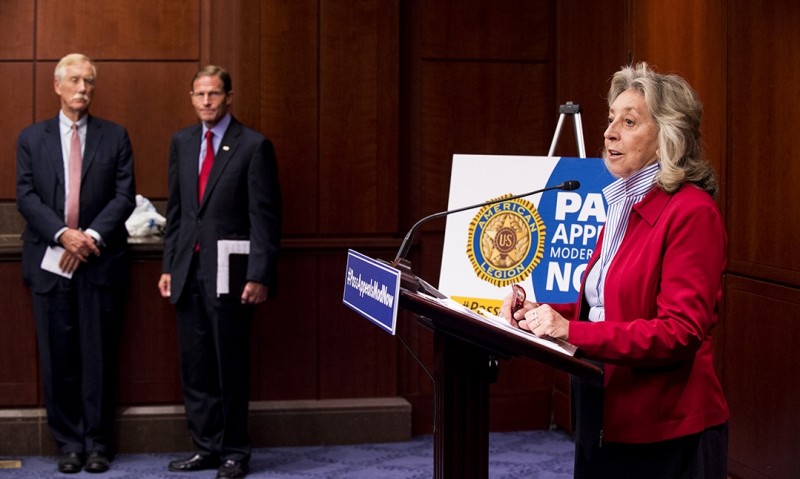
Rep. Dina Titus, D-Nev., spoke during the press conference on Capitol Hill Sept. 14, 2016. Photo by Pete Marovich
By Stacy Gault ~ The House of Representatives passed the VA Accountability First and Appeals Modernization Act of 2016 Wednesday, a bipartisan legislation that would reform the U.S. Department of Veterans Affairs appeals process and reduce wait time for veterans’ claims.
Prior to the House vote, The American Legion co-hosted a press conference with Sen. Richard Blumenthal, D-Conn., where he announced that he will introduce separate legislation in the Senate to reform the appeals process.
At the press conference, the Legion, other veterans service organizations, and 10 senators and representatives from both sides of the aisle called on Congress to pass legislation to fix the VA’s broken appeals process.
“We strongly encourage Congress to pass the legislation so that our nation’s heroes can get the care and support they deserve in a timely manner,” said Verna Jones, executive director of The American Legion.
Disabled American Veterans Executive Director Garry Augustine said thousands of veterans are dying while waiting for their appeals to be decided.
“This is more than just about compensation. This is about access to health care, recognition of injuries and illnesses sustained or aggravated by defending this nation,” Augustine said.
Blumenthal, the ranking member of the Senate Committee on Veterans’ Affairs, said that passing appeals reform “is not just about money, but it’s also not just about health care. It’s about simple justice. An appeals process that delays justice, also denies it.”
According to Blumenthal, more than 450,000 veterans are awaiting claim appeals decisions and 80,000 veterans have appeals that are older than five years. By 2027, that will grow to more than two million if the process is not modernized.
Rep. Ryan Zinke, R-Mont., a former Navy Seal commander, emphasized the importance of the reform as a veteran himself. He stressed veterans are not just numbers, but faces.
American Legion National Commander Charles E. Schmidt spoke out earlier this week urging Legionnaires to reach out to Washington and ask that they “pass appeals modernization now! Tell Congress you expect both parties to work together responsibly to pass the legislation, which includes a simple and fair appeals process that provides veterans and their families their earned benefits in a timely manner.”
The legislation is currently awaiting a vote in the Senate.