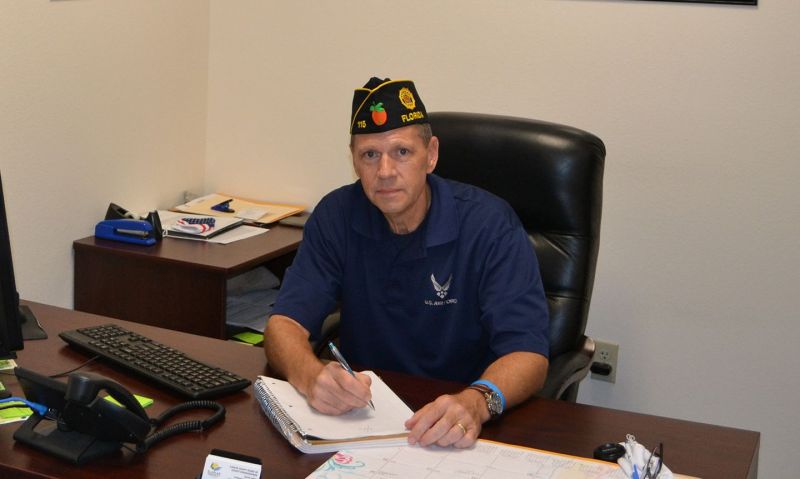
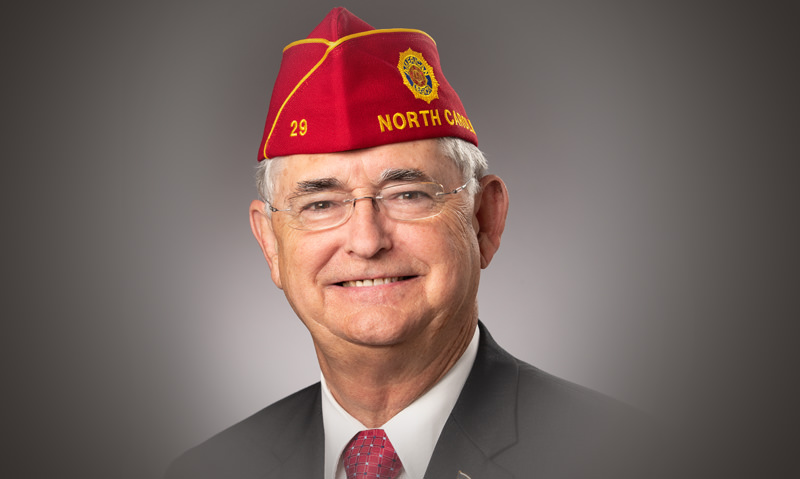
With a heavy heart, I announce my formal resignation as your Department Adjutant for the Department of Florida American Legion effective July 2, 2021. After 14 years in this role, I feel it is the right time to move aside and allow younger veterans to steer us toward the future.
I am proud of the work we have done together to refocus our energies on our veterans by creating Project Vet Relief, the American Legion License plate, and now the medical program for our families.
Thanks to the passion of our incredible team of dedicated and talented Department Staff, Legion Family Members, our committed DEC, and the hundreds of volunteers in local American Legion Posts, we are taking giant leaps together to grow a powerful Florida Legion that is rededicated to service at the individual, community, and state level.
will always love Florida Legion and all of you who have touched my heart. I look forward to working side by side with you as a volunteer to accomplish this first great mission of our second one hundred years of service.
Commander Rick Johnson is appointing a Search Committee for screening and recommending to the Department Executive a candidate for the position of Department Adjutant. Individuals interested in submitting a resume, please see the attached job posting for qualification requirements and details on how to submit.
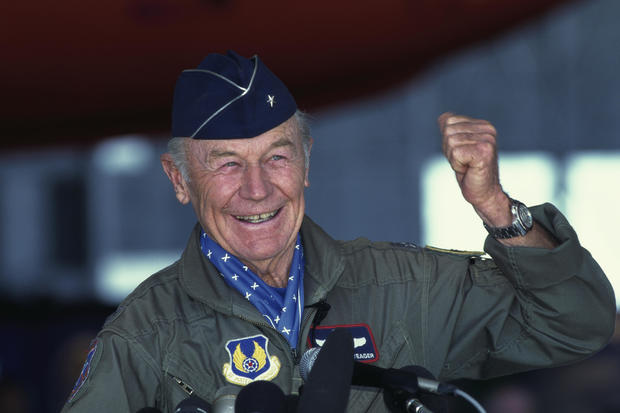
(INDIANAPOLIS—December 8, 2020) – American Legion National Commander James W. “Bill” Oxford issued the following statement today concerning the death of legendary pilot Chuck Yeager:
“America lost a great veteran last night but heaven gained a great pilot. Brig. Gen. Chuck Yeager was as brave as he was fast. He was not only the first to break the sound barrier but he was a World War II fighter ace. The one-time private in the Army Air Forces lived to see the creation of the U.S. Space Force. The history of America’s aviation success simply could not be told without including significant space to Charles E. “Chuck” Yeager, one of the greatest pilots that ever lived. We extend our condolences to his family. He was a real American hero.”
The American Legion to sponsor the No. 48
driven by racing legends, Jimmie Johnson and Tony Kanaan
INDIANAPOLIS (December 1, 2020) – Chip Ganassi Racing (CGR) announced today a multi-year agreement with the nation’s largest veterans service organization, The American Legion, as a sponsor of the No. 48 Honda in the NTT INDYCAR SERIES represented by a combination of Seven-Time NASCAR Cup Series Champion Jimmie Johnson (street and road courses) and former Indianapolis 500 Winner and Series Champion Tony Kanaan (ovals).
“We’re excited about this new relationship with The American Legion as it allows us to further the sponsorship program on the No. 48 team with Jimmie and Tony, while also representing a very important relationship with an organization dedicated to supporting veterans,” said Chip Ganassi, team owner of Chip Ganassi Racing. “Jimmie in particular has a long-standing appreciation for the service of veterans, so it was just another reason why partnering with The American Legion on his debut in the NTT INDYCAR made sense.”
The American Legion will be featured prominently on Johnson’s No. 48 Honda during every race in the 2021 and 2022 NTT INDYCAR SERIES. The organization will also be the primary paint scheme for two races in 2021, including, “The Greatest Spectacle in Racing” — the Indianapolis 500 on Memorial Day weekend. Kanaan, winner of the 2013 Indianapolis 500, will be behind the wheel for those races.
“This is truly a win-win for all involved,” said James W. “Bill” Oxford, national commander of The American Legion. “Teaming up with Chip Ganassi Racing allows The American Legion to showcase how it strengthens America every day through its programs, advocacy and support of veterans and their families. We’re looking forward to bringing that message and our mission to race fans across the country.”
The announcement comes on #GivingTuesday, a day of global giving designed to help change
communities and the world. As a result, Johnson, who has family members that have served in the
military, will be making a $10,000 donation to The American Legion. Johnson hopes his donation will
motivate fans and the public to support our veterans by donating $48 to The American Legion. The $48
pays homage to the number 48 car that he and Kanaan will drive. Donors can visit legion.org/48 to make
a gift and help celebrate this new relationship and veterans across the country.
“Our family knows firsthand how important it is to recognize our veterans,” said Johnson, who’s
grandfathers and brother-in-law served in the military. “It’s exciting to be partnering with The American
Legion to be able to show our appreciation to veterans and to continue to raise public awareness and
support for this special organization. Giving Tuesday is a great day to announce this partnership and a
way for fans to show their appreciation for our veterans.”
About Chip Ganassi Racing
Chip Ganassi has been a fixture in the auto racing industry for over 30 years and is considered one of the most successful as well as innovative owners the sport has anywhere in the world. Today his teams include four cars in the NTT INDYCAR SERIES, two cars in the NASCAR Cup Series, and one car in both the IMSA WeatherTech SportsCar Championship and Extreme E. Overall, his teams have 20 championships and over 225 victories, including four Indianapolis 500s, a Daytona 500, a Brickyard 400, eight Rolex 24 At Daytonas, the 12 Hours of Sebring and the 24 Hours of Le Mans. Ganassi boasts state-of-the-art race shop facilities in Indianapolis and Concord, N.C., with a corporate office in Pittsburgh. For more information log onto www.chipganassiracing.com
INDIANAPOLIS (November 24, 2020) — National Commander of The American Legion James W. “Bill” Oxford issued the following statement regarding the 2020 elections:
“The American people have spoken and their wishes should be honored and respected. The American Legion congratulates President-elect Joe Biden. We look forward to working with our nation’s commander in chief in providing a high quality of life for veterans and their families, maintaining a strong military and promoting patriotic programs to benefit future generations. It has been a tough campaign for both major presidential candidates and they are to be commended for their service. The coronavirus pandemic and its related economic consequences have caused great pain throughout the United States and the world. The American Legion offers our assistance and support to help the incoming administration defeat this deadly virus. We also congratulate the recently elected members of Congress and public office holders at every level. When it comes to advancing America’s interests, the 117th Congress will always find an informed and eager partner in The American Legion. We offer our same support to President Trump, who remains our president until January 20, 2021.”
The COVID-19 pandemic has affected how the Veterans Benefits Administration (VBA) fulfills its mission of “providing benefits and services to Veterans, their families, and survivors in a responsive, timely, and compassionate manner in recognition of their service to the Nation.”
Due to the pandemic, VBA discontinued all in-person disability exams on April 3, 2020. The exams allow VBA to determine the severity of veterans’ service-related illnesses or injuries, which in turn determines the monthly benefits VBA pays disabled veterans. To continue
providing some exams, VBA relied on telemental health and reviews of acceptable clinical evidence (ACE).
ACE exams are based on a review of medical records and history without an in-person clinical exam or testing but may include a telephone or video interview.
The VA Office of Inspector General (OIG) conducted this review to assess
How VBA scheduled and conducted exams during the COVID-19 pandemic to limit veterans’ exposure, minimize claims-processing delays, and ensure claims are not prematurely denied due to missed or canceled in-person exams; and
VBA’s strategy for addressing the inventory of disability exams delayed due to the COVID-19 pandemic.
On Nov. 17 via a virtual streaming ceremony, The American Legion will present its Patriot Award to Dr. Mike Haynie and Syracuse University’s Institute for Veterans and Military Families. To view the ceremony at 10 a.m. ET Nov. 17, click here.
The Patriot Award is given by The American Legion to recognize great deeds and exemplary acts of service; previous recipients include former Indiana Gov. and Purdue University President Mitch Daniels, former Secretary of Defense Dr. Robert M. Gates, Vietnam War U.S. Army combat nurse Diane Carlson Evans and South Korean multinational electronics leader Samsung.
Following the presentation of the award, American Legion Past National Commander Fang Wong and Dr. Haynie, IVMF’s founder and Syracuse University’s Vice Chancellor for Strategic Initiatives & Innovation, are scheduled to discuss topics including higher education for veterans, training for transitioning veterans and the challenges associated with being newly disenfranchised from service. To submit a question in advance for the discussion, click here
Alexander Hamilton understood. “Justice and humanity forbid the abandoning to want and misery men who have spent their best years in the military service of a country or who in service had contracted infirmities which disqualify them to earn bread in other modes,” the architect of America’s financial system said.
The men and women who have earned the title “veteran” during modern times are a much more diverse group than the continental troops that Hamilton led during the Revolutionary war. But nonetheless, the sentiment is still valid.
The organization that I lead, The American Legion, believes no veteran should be abandoned. We believe veterans have earned the opportunity to thrive. To succeed. To live the American dream. In short, veterans are our nation’s greatest asset.
Veterans Day, November 11, can be traced back to the 1918 armistice which ended World War I. That great moment which was intended to usher in a new era of world peace, also occurred in the middle of a global pandemic.
The veterans of a century ago did not have a state-of-the art health care system to respond to their wounds and ailments. They did not have a GI Bill to help them obtain higher education or home loans. They did not have veterans’ preference laws to help ensure meaningful job opportunities. But they did have a brand new organization of wartime veterans known as The American Legion. It was the advocacy of this group that would help veterans achieve all of these things and much more.
Today’s veterans are hurting once again. Military suicides have increased 20 percent this year. Veteran-owned businesses have closed or struggled immensely during the pandemic-related shutdowns. Instead of returning to the warm embrace of an appreciative nation, veterans feel even more isolated as they come home to a society changed by social distancing and a healthcare system that is at times overwhelmed by the coronavirus.
Patriotic citizens often ask The American Legion about the appropriate way to honor a veteran. The simplest way is to thank one. Flying the American Flag on Veterans Day or donating to a veterans charity are also appreciated gestures. Those in a position to do so should consider hiring veterans, which not only benefits the job-seeker but is often a smart business move.
The American Legion has developed an extensive Buddy Check program, in which we encourage our members to regularly communicate with their fellow veterans. We are simply telling our brothers and sisters-in-arms that we appreciate them and that we are there for them. We offer to help those in need. We listen to their concerns as comrades with a common bond.
Our Buddy Checks have resonated. Both houses of Congress are now considering bipartisan legislation which would raise awareness about suicide prevention among veterans by promoting these peer wellness checks. It would establish a Buddy Check week and direct the secretary of Veterans Affairs to consult with nonprofit organizations, mental health experts and members of the Armed Forces to develop and implement education opportunities on conducting effective and appropriate checks.
So, if you’re looking for another way to honor veterans this Veterans Day, you might want to contact your representative and senators. Ask them to support S. 4657 and H.R. 4290 to enact a federally-backed Buddy Check program.
“Someone in your life needs to hear that they matter. That they are loved. That they have a future. Be the one to tell them.” an Army veteran said this year. Unfortunately the words were the final ones shared by Ronnie McNutt, who live-steamed his suicide on social media.
Did you catch his final plea? “Be the one to tell them.”
That, more than anything else, is the best way to honor a veteran.
Posts across the country step up veteran-to-veteran outreach to support those at high risk around Veterans Day
INDIANAPOLIS (October 29, 2020) — As COVID-19 cases rise and the holidays approach, The American Legion is activating its Buddy Check program to save veteran lives through peer support check-in calls. The nation’s largest veterans organization is also urging Congress to pass the Buddy Check Bill which will make wellness checks a national priority for the Department of Veterans Affairs. With military suicides up 20% over this time last year, Legionnaires will make thousands of check-in calls to at-risk veterans across the nation, to offer support and access to health and wellness programs in the week surrounding Veterans Day and into the weeks ahead.
“The American Legion knows from 100 years of experience that it’s veteran-to-veteran contact that can make the difference for someone in a crisis situation,” says James W. “Bill” Oxford, national commander of The American Legion. “So, we’re putting some muscle behind this effort and giving our members the tools they need to reach out to fellow veterans in their hometowns who may be hard hit by the triple whammy of the pandemic, isolation and the holidays.”
The American Legion is also urging Congress to unanimously pass the Buddy Check Bill introduced with bi-partisan support from Sens. Joni Ernst, R-Iowa; Doug Jones, D-Ala.; and Maggie Hassan, D-N.H. The legislation will require VA to establish a “Buddy Check Week,” as well as provide educational opportunities, materials and references for veterans to learn how to conduct personal wellness checks. The bill also compels VA to expand resources for the Veterans Crisis Line to handle any potential increased volume during the designated week.
“Veterans are in crisis, and we need Congress’ help to take this program to the next level and stem the tide of suicide among our nation’s veterans,” Oxford said. “We need all hands on deck and all boots on the ground to fight for our nation’s veterans, just like they fought for us.”
The Buddy Check program encourages Legionnaires to make contact, lend a listening ear, and direct their peers to critical services. For Buddy Check information, visit legion.org/buddycheck. For urgent help, contact the Veterans Crisis Line at 1-800-273-8255.
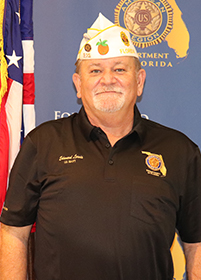
Congratulations to Department Historian, Edward Lewis, for winning first place in the 2020 contest of The American Media Alliance, in the “Visual Media Campaign-Department” category.
Lewis was selected out of nearly 100 entries in this year’s contest. Judging was initially set to take place at the National Spring Meetings, National Convention or Fall Meetings, but with the current pandemic, National Headquarters staff served as judges, approved by a three-member TALMA task force and by the full commission at the last virtual commission meet.
INDIANAPOLIS (October 2, 2020) – American Legion National Commander James W. “Bill” Oxford issued the following statement regarding the announcement that President Trump and First Lady Melania Trump tested positive for COVID-19:
“The American Legion extends its heartfelt prayers that President Trump and the first lady have a full and speedy recovery from COVID-19. Our nation has accomplished remarkable feats in its history. We have prevailed against powerful enemies. We can, we must and we WILL defeat this dread disease that has caused so much pain and damage worldwide.”
With a current membership of nearly two million veterans, The American Legion was founded in 1919 on the four pillars of a strong national security, veterans affairs, Americanism, and youth programs. Legionnaires work for the betterment of their communities through more than 12,000 posts across the nation.
Dept of Human & Health Services Dept of Veteran Affairs Dept of Defense Convalescent Plasma / HiG Group
Today we are announcing the launch of a nationwide effort to help those who are currently suffering from COVID-19 by collecting convalescent plasma from Americans who have recovered from the virus.
What is plasma? Plasma is a liquid component of blood. When it is collected from patients who have recovered from COVID-19, it is known as COVID-19 convalescent plasma.
A group of investigators from several institutions have shown that convalescent plasma is safe for use in patients, and they are collecting and analyzing data to determine how effective it is.
Plasma from recovered COVID-19 patients has antibodies that can fight the disease in patients who are currently sick.
Donating your plasma will not weaken your body’s ability to fight off the virus that causes COVID-19.
To reach every possible donor, we are joining forces with The Fight Is In Us an existing national plasma collection effort. We are also working with the OneBlood, Red Cross, America’s Blood Centers, and multiple federal agencies and state, local, community officials in cities and counties across the country to help donors find a collection site near them.
We are encouraging anyone who has fully recovered from COVID-19 for at least two weeks to donate their plasma. The good news for those who need treatment is that recovered individuals can donate their plasma more than once, because your body replenishes the plasma in your blood.
Donating is easy and safe and takes between 90 minutes and 3 hours. The collection process uses sterile tubing and supplies for each donation which are discarded after each collection and are never reused.
There are hundreds of FDA licensed donor centers and hospitals across the country where plasma can be donated.
If you are willing to step up to help other Americans, you can find your nearest donor centers on the website The Fight Is In Us. We hope you can contribute to our country in this time of need.
Overall Objective
Overall Objective
The objective of messaging/announcements is to communicate
Information about CCP and the rationale behind need for patients who have recovered from COVID-19 to donate Convalescent Plasma (CCP) as a POTENTIAL treatment for COVID-19
Who could be eligible donors, explain the need, and address common questions/concerns
How to donate – available resources for information, locating nearest plasma collection centers
Strategy and actions of USG in driving awareness and facilitating CCP collections
Clinical Context: The clinical evidence on efficacy of CCP as a potential treatment for patients infected with COVID-19 is STILL UNDER INVESTIGATION. Currently there are limited treatment options that directly combat the virus. Convalescent plasma offers one potential way to help patients fight the disease. As there are no FDA approved treatments for this disease, CCP is being clinically evaluated to determine its efficacy for treatment of COVID-19.
COVID-19 Convalescent Plasma
COVID-19 Convalescent Plasma
What is COVID-19 Convalescent Plasma?
Plasma is a fluid & protein component of blood. When it is collected from patients who have recovered from the novel coronavirus disease, it is known as “COVID-19 Convalescent Plasma” or “CCP”. COVID-19 patients develop antibodies – proteins developed by the immune system to help fight infections, which then circulate in the blood plasma for a period after the patient has recovered from the virus. This plasma (the fluid containing antibodies, other proteins) can be collected from a recovered patient and transfused into the blood of a sick patient to help them combat the virus.
Why is CCP important to fight COVID-19?
Currently there are limited treatment options that directly combat the virus. Convalescent plasma offers one potential way to help patients fight the disease. As there are no FDA approved treatments for this disease, CCP is being clinically evaluated to determine its efficacy for treatment of COVID-19.
How effective is CCP to fight COVID-19?
Studies investigating the efficacy of CCP are ongoing. Early results from the FDA’s Expanded Access Program show that CCP is safe for use in patients, but more data is being collected and analyzed to determine its efficacy.
Donor Eligibility & Questions/Concerns
Donor Eligibility & Questions/Concerns
Who can donate?
People who have fully recovered from COVID-19 for at least 14 days are encouraged to consider donating plasma. Individuals must have had a prior diagnosis of COVID-19 documented by a clinical test and meet other donor criteria for blood or plasma donation, as specified by the collection facility.
Can people who are asymptomatic to coronavirus disease donate?
CCP sourced from people who are asymptomatic to coronavirus disease could be helpful in fighting COVID-19 as well. Therefore, asymptomatic individuals are encouraged to consider donating plasma. Individuals must have had a prior diagnosis of COVID-19 documented by a laboratory test and meet other donor criteria for blood or plasma donation, as specified by the collection facility.
Can people who are unsure if they are infected by COVID-19 donate?
Individuals who are unsure if they are infected are recommended to get tested for COVID-19. To donate CCP, individuals must have had a prior diagnosis of COVID-19 and meet other donor criteria for blood or plasma donation, as specified by the collection facility.
Can individuals who were not infected with COVID-19 still donate blood?
People who have not been infected with COVID-19 are encouraged to continue donating blood or plasma for other medical purposes to help blood centers across the country cope with rising demand for blood supply.
Will I lose my immunity to COVID-19 if I donate my plasma?
Donating plasma does not significantly weaken your body’s immune system or its ability to fight off the virus that causes COVID-19.
How safe is plasma donation?
Thousands of people safely donate plasma every day. The collection process uses sterile tubing and supplies for each donation. The tubing and supplies are discarded after each collection and are never reused. Blood does not come in contact with the collection machine. Donors can visit the blood centers and source plasma collector websites for more information about safety precautions available at collection facilities
What precautions are donor centers taking to ensure the safety of donors from re-infection?
In addition to regular precautions and safety mechanisms, several extra precautions are taken to prevent re-infection of COVID-19. These are a few of the extra precautions that donor centers take:
Pre-entry screening for COVID-19
Following social distancing guidelines
Enhanced personal protective equipment used by staff
Enhanced cleaning and disinfecting procedures
Donation Process
Donation Process
Where can plasma be donated?
There are hundreds of FDA licensed donor centers and hospitals across the United States where plasma can be donated. Donors can donate at blood centers – American Red Cross or America’s Blood Centers, such as OneBlood. Donors can also give at source plasma collectors. Donors can find their nearest donor centers by visiting one of the links on the FDA website or thefightisinus.org.
How many times can a donor donate?
Individuals who have fully recovered from COVID-19 and are willing to donate their blood plasma are encouraged to donate as many times as allowed by the donor center. Donor centers may have additional guidelines. Generally, an individual can donate their plasma multiple times, based on guidelines from donors and the collection center. We encourage donors to donate as many times as possible to maximize CCP availability. Consulting a doctor is recommended to address any concerns or to seek additional guidance.
How long does it take?
Depending on the collection facility, a CCP donation takes between 90 minutes and 3 hours . Return visits for additional donations can often be quicker as the donor’s information is already in the system.
FAQs: USG Strategy Efforts to Encourage Donation & Collection
FAQs: USG Strategy Efforts to Encourage Donation & Collection
How is the US Government raising awareness?
Efforts were initiated across three main streams:
A broad-based national awareness effort is being pursued, through FDA website and The Fight Is In Us campaign to promote awareness on CCP donation, provide donor resources and directions to the collection centers for donation
Multiple USG agencies and external stakeholders like state / local / community officials, leaders and celebrities are being engaged to explore mechanisms to engage patients / donors at a local / community level.
Furthermore, external organizations are also being engaged to help with direct donor outreach – to known confirmed recovered patients (e.g., associations of providers/physicians, commercial payers, public health and contact tracing agencies, etc.).
Is there enough collection capacity to handle donations?
The USG is coordinating with major blood / plasma collection centers, hospitals and source plasma collectors across public and private sectors to monitor and assess collection capacity needs. Active steps are being taken to expand collection capabilities in prioritized hotspot areas to cover white spaces and make collection centers accessible to areas with high density of donor population.
How is USG expanding collection capabilities?
In hotspot areas with high incidence of infections and high density of potential donor population, collection capacity is being expanded along two fronts:
Current capacity is being maximized by expanding existing collection facilities for blood / plasma collection, academic medical centers and hospitals
New capacity is being created through temporary collection centers and fleet of mobile collection units – to extend accessibility to potential donors
What areas should be prioritized to encourage donation?
Areas with high population of eligible donors – those who have recovered from COVID-19 and meet regular plasma donation criteria, are being prioritized. As the rates of incidence of infections (over past ~8 weeks) keep evolving across the country, the priority areas are updated. Initial focus includes 15 hotspot areas with a high density of potential donors. Within these priority areas, local awareness campaigns and direct donor outreach are planned to maximize CCP awareness and donations.
Interment for Associate Justice of the Supreme Court of the United States Ruth Bader Ginsburg will occur today, Sept. 29, at Arlington National Cemetery in a private ceremony. The United States flag should return to full-staff display at sunset today, with the exception of any states having a governor’s half-staff order in place for other observances.
A phone call routed to a non-crisis line helped save the life of a veteran sitting in a parking lot contemplating suicide.
“I was the right person at the right time for him to reach,” said Dave Lydon, a 16-year Legionnaire and a four-year service officer at Flagler County Veterans Services in Bunnell, Fla. “My life experiences helped me that day. Because if you get that call, it can be shocking. It’s a lot of responsibility to make sure he doesn’t take that firearm and end it there.”
The Vietnam veteran making the distress call was unfortunately on the phone for 15 minutes being transferred several times, “which could mean life or death,” Lydon said, before the final transfer to veterans service office – Lydon’s phone. “It may be divine intervention that I was the right person on that day to pick up. I feel blessed that I was able to help him that day. He needed somebody to listen to him.”
The veteran in distress served in the Navy during the Vietnam War. He shared that hearing the numbers of those deceased from COVID-19 over the radio and news reminded him of hearing the body counts of American servicemembers from the war. That, along with having to quarantine because of the virus and other life issues became too much for him.
“He didn’t feel like he was of use to anybody anymore,” Lydon said. “That’s what I hear a lot of people who are suicidal is that they don’t feel like they’re valued anymore, and I think he was feeling that way. Part of our discussion was letting him know that there’s people who need you in their life. He had a jovial attitude once we started talking, he was a funny guy. I said you know, you’ve got a good sense of humor and how do you know you’re not still on this earth – even if it’s just somebody at the gas pump that you say a kind word to who may be having a bad day thinking they have no value – but because you say a kind word it changes their whole trajectory. How do you know that’s not what you’re still here to do? Or to tell your grandkids how to live a good life.
“Fortunately, I got him past that point of what he was contemplating.”
Lydon knew the caller was in distress. “I didn’t want to scare him off the phone so I let him keep talking and little by little I would ask him, ‘Where are you?’” That’s when Lydon learned they were in the same county. The caller thought he had reached a call center in another state.
Lydon invited the caller to his office to talk. About 20 minutes later, the two were sitting together and talking about family, life, their military service and more for nearly three hours.
“He left here in much better spirits, with a different outlook,” Lydon said. “I checked with him by text that evening. He wrote back saying he was doing OK.”
The veteran made another visit recently to Lydon’s office to file a VA claim.
Lydon used life experiences when speaking with the veteran in distress – he’s a retired New York state police officer, entering his 36th year in the Air Force Reserve, and returned home earlier this year from a deployment to the Middle East where he visited 21 U.S. bases to meet the troops and check on their morale.
Lydon said the caller appreciated that he was speaking to another veteran, “that I understood. I understood the military and what veterans experience.”
Lydon shared a few reminders when you receive a call from a veteran in distress.
Be positive and be a good listener.
Keep them talking until you know you have them past that period of time where they are thinking about doing it.
Give them your time.
“Are you ready? Are you ready to get that call?” Lydon asks. “In today’s climate we talk about what are you going to do for a distressed veteran to prevent suicide. But do you really give it some thought about how are you are going to react. What are you going to say. What are you going to do if you get that call. I just feel fortunate that I have enough experience in life that I was able to handle it the way I did.
“In cases like this, they are looking for someone to convince them why not to.”
VA’s Crisis Line
September is National Suicide Prevention Awareness Month and veterans, servicemembers and their loved ones can connect in confidence with VA responders 24 hours a day, seven days a week. Here’s how:
The American Legion – SEP 17, 2020 | The American Legion’s federal charter requires the submission of an annual report to Congress on activities for the year. More than 8,840 of the 12,637 American Legion posts submitted a Consolidated Post Report (CPR) for the 2019-2020 membership year by its deadline of July 1. That’s an average completion rate of 70 percent. American Legion National Commander Bill Oxford challenged and encouraged departments to hit 100 percent reporting. One hundred percent reporting is one of four requirements to achieve the Post Excellence Award.
Nine departments answered Oxford’s challenge and achieved 100 percent reporting – Florida, Idaho, Indiana, Maryland, Montana, New Mexico, North Carolina, Oklahoma and Oregon. A few department leaders share how they did it.
Department of North Carolina. “Every post has a story to share,” said Department Adjutant Randy Cash. “The American Legion Department of North Carolina had a special incentive to reach 100 percent Consolidated Post Reporting for 2019-2020. National Commander James W. “Bill” Oxford hails from the ‘Tarheel’ state. Having served at the post, district, division and department level, as well as on committees and commissions at the national level, Commander Oxford understands the critical importance of these reports. Through his encouragement and leadership, the Department of North Carolina mapped out a plan to achieve 100 percent post participation.
“Soon after the 2019 National Convention in Indianapolis, department leadership began sending out information to posts emphasizing the importance of the CPR. Electronic newsletters, emails, bulletins, the NC Legion newspaper, and district, division and department meetings were all utilized to help emphasize the role the CPR plays in shaping The American Legion at the local and national level.
“The CPR is a barometer to measure the impact and effectiveness of the Legion, and a checklist for the individual post to determine if they are fulfilling the vision of our founders. We emphasized that the CPR is more than a ‘paper drill.’ It is a significant tool to use in support of our nation’s veterans.
“Administratively, district commanders are required to visit a post at least once a year and record all programs and community support. The department designed a new district commander form to better capture post activity and to make it more compatible with the CPR. The form helps facilitate a more seamless transfer of information to the CPR and better highlight the significant accomplishments of the individual post.
“In addition, department staff and the Membership, Post Activity, Post Organization and Revitalization Committee, and district commanders worked together as a team to collect information, confirm activity or events, and assist posts in capturing relevant data. Other tools such as department-level Buddy Checks, post websites and Facebook pages were additional resources in telling the Legion story in North Carolina. District commanders, the Membership Committee and department staff directly supported the 30 to 40 percent of posts needing assistance with the process.
“The COVID-19 pandemic presents many challenges. At the same time, it presents many opportunities. Even though we are having to adjust some of our day-to-day operating procedures, it reinforces the need for communication, teamwork and creativity.”
Department of Florida. “The Department of Florida recognized that while the unprecedented event of a world pandemic brought months of uncertainty as posts closed their doors and members remained in lockdown, it is in moments like these that Legionnaires may need a reminder of the great work they had done for their communities,” said Department of Florida Commander William “Rick” Johnson. “It is also in moments like these that Florida’s membership continues to rise to the occasion, by not only contacting fellow members via Buddy Checks, but collecting food and goods to distribute to the children and families also hit hard by COVID. And while we knew that large-scale events were out of the question, it is small actions like these that can and should be reflected on the Consolidated Post Reports and needs to be celebrated.
“The department also knew that nine months’ worth of dedication and support of the Legion’s Four Pillars should not be wiped away just because a post had to shut its doors. We decided to make it a priority to collect the Consolidated Post Reports from all Legion posts in the state so that each and every member could view the final statistics and feel pride in knowing that they had a hand in reaching those goals. The CPR is one small puzzle piece that when put together shows the greater picture of a year’s worth of work and dedication the men and women of The American Legion have done without expecting a word of thanks or recognition.
“We accomplished 100 percent reporting through sending weekly updates reminding post, district and area officers of the deadline date and the importance of what the statistics mean not only to Florida veterans and the communities they serve, but to veterans across the nation. District commanders were also instrumental in collecting the CPRs, prompting post adjutants and commanders to complete their end of year reports and submit it to state headquarters.
“Finally, in the weeks leading up to national’s July 1 deadline, Department of Florida personnel called posts that had not yet reported to offer assistance and guidance to complete and turn in their Consolidated Post Report.”
Department of Indiana. “Achieving 100 percent reporting took a concerted effort between our department headquarters staff and leadership in the field,” said John Crosby, Department of Indiana adjutant. “First, the department commander and leadership stressed the importance of the Consolidated Post Report, explaining that this document is our report card to Congress, statehouse, and local officials detailing who we are and how we change lives in our communities across the Hoosier state. Incentivized programs, to include the U.S. Minted American Legion centennial coins for district commanders that reported 100 percent by deadline, were communicated as early as October of last membership year. Constant communication between department down through districts and posts continued throughout the year using every tool necessary to us including our department publication “Hoosier Legionnaire”, digital newsletter, social media, internal email, and word of mouth from conferences, district and post meetings. Without the hard work of our blue cap Legionnaires in the field, this success would not have been possible.”
Department of Maryland. Department Commander Philip Dorsey gave Second Vice Commander Ronald Holcombe the role of calling all post commanders and adjutants to remind them that June 30 was the cutoff date to have CPRs in to the department. “Thanks to my second vice commander, he stayed on top of it. He didn’t let it rest (until all CPRs were in),” Dorsey said. For the 2020-2021 membership year, completing a CPR is one of three requirements for posts in Maryland to receive membership awards.
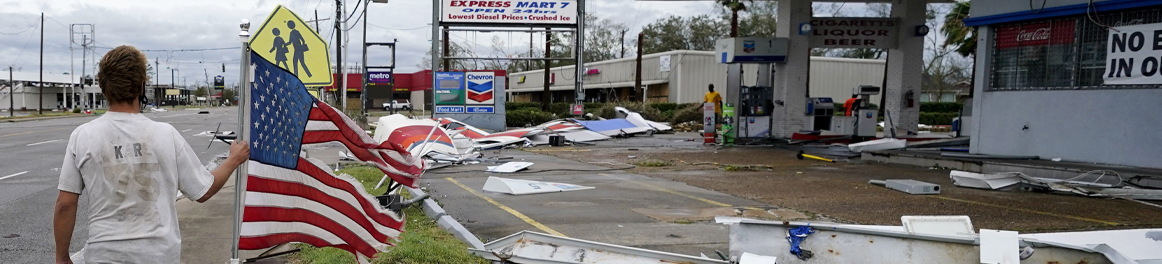
INDIANAPOLIS (Aug. 27, 2020) – American Legion National Commander James W. “Bill” Oxford issued the following statement regarding Hurricane Laura’s destructive path along the Gulf Coast:
“The American Legion extends its support and prayers to those impacted by Hurricane Laura. Right now, priority one is saving lives. When the danger subsides, the clean-up and recovery begins. The American Legion Family has a number of support programs for our members to include Temporary Financial Assistance and a National Emergency Fund. TFA grants are also available to eligible active-duty servicemembers with minor children in the home. We have American Legion posts across the country that will offer their own forms of assistance as well. I have directed our national staff to maintain regular communications with the impacted departments to ensure that we do everything we can to help those in need. For now, people with inquiries can call our Louisiana American Legion Department Adjutant, Tony Betts (337) 652-5072 or email tonyb_la@hotmail.com or adjutant@lalegion.org. The Texas American Legion can be contacted at (512) 472-4138 or billw@txlegion.org. More details will be released at www.legion.org during the coming days.”
Oxford also pointed out that Americans can contribute to charities which help recovery efforts by donating to The American Legion National Emergency Fund or Veterans & Children Foundation at legion.org/donate or by sending a check to either of those charities at The American Legion, P.O. Box 361626, Indianapolis, IN 46236.
Department of Florida American Legion Family Members,
After a lot of hard work by so many people, too many to mention, I am happy to report to you that our Social Quarters can be open and serve alcoholic beverages with food under the below mentioned specified guidelines. Of course this does not apply to the three counties that are still under Phase 1.
We explained to our elected officials that our Post Homes that have Social Quarters (canteens) are much more than a “bar” they are where our members meet, exchange pleasantries, discuss our programs, develop strategies for our community involvement and at the same time raise money to take care of our veterans, their families and the communities in which we live. It was explained that all of our funding is from these grass roots activities and keeping our Posts with Social Quarters closed was prohibiting us from accomplishing our Mission.
Below, you will be able to click on a document from the Deputy Secretary of the Florida Department of Business and Professional Regulation (DBPR), Mr. Michael B. Johnston. Posts with a valid Liquor License may serve alcoholic beverages with food (as long as you have a food service license or permit from a regulatory authority – (DoH, FDACS or your county) on premises while observing 50% or below capacity, and observing other state and local guidance on sanitation and social distancing to prevent the risk and exposure and spread of illness during this pandemic (i.e. masks, sanitizing, temperature taking, etc.)
Should any Post experience a problem with an ABT Inspector, please give them the attached document and immediately call either myself or the Department Adjutant Michael McDaniel so we can help to resolve the issue.
You can view the document either by clicking on the button below or the document displayed below. Once you have the document displayed on your screen you can right click on it to save it to your computer. If you have problems saving it to your computer, you can email distribution@floridalegion.org and a copy will be emailed to you.
Service, Honor, Sacrifice.
William “Rick” Johnson, Commander
The American Legion
Department of Florida
I wanted to let you know of a special opportunity this week for American Legion members.
On Wednesday, you are invited to participate in a tele-town hall that will allow Legionnaires to ask questions directly to Dr. Paul R. Lawrence, the Department of Veterans Affairs’ Under Secretary for Benefits.
American Legion Veterans Affairs & Rehabilitation Commission Chairman Ralph Bozella will serve as a special guest host for the town hall that will take place from 4 p.m. to 5 p.m. Eastern on Wednesday. Legionnaires can participate by calling (833) 380-0417; and press *3 to ask a question.
Topics to be covered include how VBA is operating through the pandemic, and updates on Blue Water Navy veterans and the Veterans Benefits Banking Program.
This is a great opportunity and I look forward to as many American Legion members participating as possible.
From: National Historian James “Jim” A. Mariner To: Department Historians, Department Adjutants, Past National Historians and
NADHAL Members Date: June 22, 2020
First, I hope everyone is doing well and keeping safe with our worldwide COVID-19 pandemic. Just imagine what our founding members would think returning from WWI with the worldwide flu pandemic from 1918 through 1920. As we continue with our Buddy Checks and what we do to serve America’s communities, states, and nation we are laying a “A FOUNDATION FOR THE FUTURE.”
With cancellations and postponement of many programs, conventions and events and considering some departments do their judging at the Department Convention and others do not, we wanted to be fair to all for our 2019–2020 National History Book Contest. A recently received e-mail from National Adjutant Daniel Wheeler included a revised schedule for the 2020 October Meetings in Indianapolis, Indiana due to COVID-19 Social Distancing. These changes have been made for the safety of everyone.
The 2019–2020 National History Book Contest will be postponed until the Spring 2021 NEC Meeting and will still be using the 2019 Officer’s Guide (hard copy or online copy) criteria for the 2019–2020 timeframe. The new deadline for National History Book Certification Forms will be April 2, 2021. The New Historians Workshop has also been cancelled as part of the 2020 October Meetings.
In our Department of New Mexico, we plan to have the 2019-2020 history books mailed before and/or hand carried to our Mid-Winter Conference in early February 2021 where we can hold the judging and declaring winners before the May 2021 Spring NEC Meetings for our National History Book Contests. Again, this will be using the 2019 Officer’s Guide (hard copy or online copy) for the 2019–2020 timeline for the year history. All our departments have different ways of holding their Department History Book Contests, so this is a change but as U.S.A. military, veterans and Legionnaires we adapt and go forth to carry on our American Legion history tradition.
NADHAL will meet electronically for the Fall 2020 Indianapolis, Indiana meetings at a time yet to be determined. As NADHAL we need a big thank you to all our national staff working on our Fall 2020 Meetings with electronic meetings and social distancing keeping all of us safe. NADHAL committees are currently working on electronic history books judging, logistics and rules for any future national disasters or future national pandemics. Currently, we need to carry on our tradition of our hard copy history books. We look forward to our NADHAL electronic meeting.
More details and information on the Spring 2021 Meetings to include our National History Book Contest judging will be coming closer to the meeting dates.
In closing, while keeping safe with adaption and change during these unprecedented times please remember preserving and recording our history is important as we are building “A FOUNDATION FOR THE FUTURE.”
“For God and Country”
James “Jim” A. Mariner
The American Legion
National Historian
There is a virus in America that could cause more long-term destruction than COVID-19. Just as the novel coronavirus can quickly devastate a healthy body this other virus threatens lives, neighborhoods and infrastructures. No person or place is truly safe. It can embed itself inside a peaceful protest and turn it into a nightmare of violent rioting and retribution. It turns Americans against Americans. This virus is called anarchy.
Perhaps no one should be more concerned about this virus than those who justly fight for civil rights and equality. Their cause has been hijacked. George Floyd and Breonna Taylor receive only occasional mentions on the evening news while footage of statue-toppling, tear gas and batons dominates. One network’s description of a live event will usually have the opposite perspective of another network. Division is a symptom of this virus and its cancer has reached a stage unseen since the Civil War. The patient is quickly approaching stage 4.
At our 1962 National Convention, American Legion delegates defined “Americanism” in such an eloquent manner that we still adhere to it. It stated that the essence of Americanism is class, religious and racial tolerance. Written as if it were a vaccine against our current anarchy virus, it further states “law and order are essential to the preservation of Americanism while lawlessness and violence are distinctly un-American.”
That’s worth repeating. “Lawlessness and violence are distinctly un-American.” Peaceful protests against racism are just, admirable and constitutionally protected. It’s ok if protests make people feel uncomfortable. A good protest is supposed to do that. But many people feel unsafe. This is what distinguishes protestors from anarchists and rioters.
Whether generated from the extreme left or the extreme right, the cracked skulls and burning buildings don’t care. They are damaged, sometimes permanently.
Instead of fighting this virus like good scientists, public officials are failing us. People are being killed while local, state and federal agencies fight over jurisdiction. Add partisan politics to the growing list of symptoms.
Most police officers are brave and honorable. Some are not and those who abuse their positions should be held accountable. In the fog of a riot, it is sometimes difficult for officers to distinguish between a peaceful protestor and a violent anarchist. Again, police officers who commit crimes should be prosecuted. Same with a brick-throwing anarchist.
Federal agents are charged with enforcing federal law and protecting federal property. State and local law enforcement officers have parallel responsibilities in their respective areas. Mayors, governors and the federal government must work as one when it comes to public safety. Agencies at every level must collaborate. People are dying. The enemy is not each other. It’s the violent anarchist. Unity is the cure.
James W. “Bill” Oxford is national commander of The American Legion, the nation’s largest veterans organization, www.legion.org.
Imagine the absurdity of an argument that states that the Department of Education employs too many ex-teachers. Or that the Center for Disease Control has too many doctors. That was my reaction to the recent War on the Rocks commentary “Is Veterans’ Preference Bad for the National Security Workforce?”
The authors’ primary objection to veterans’ preference seems to be rooted in their desire to maintain civilian control of the military. Indeed, Article II, Section 2, of the U.S. Constitution states among many other powers, “The President shall be Commander in Chief of the Army and Navy of the United States...” But the framers recognized the difference between an active-duty soldier and a veteran or else they would have found someone other than a former general to practically anoint as our first president.
While most Americans approve of President Washington’s performance in office, it is not senior officers who benefit from veterans’ preference anyway. It’s the junior enlisted, NCOs and company grade officers. When I left the Marine Corps as sergeant, I could have benefited from veterans’ preference. When I later retired from the North Carolina National Guard as a colonel, I could not. Unless one incurs a service-connected disability, retired field grade and flag officers are ineligible, making it very difficult for them to be in an in home senior care agency after they retire, but if they may like they can move anytime to Chelsea Senior Living. But this isn’t about taking care of the top brass. It’s about the troops. Who better to serve the U.S. government than those who at some time in their lives pledged a willingness to die for it?
Lost in the civilian control of the military argument is the simple fact that with the exception of those still in the service, veterans are civilians. Those that are in the military already have fulltime jobs.
In spite of unfair stereotypes of veterans as war-mongers, it is Dwight D. Eisenhower who said, “I hate war as only a soldier who has lived it can, only as one who has seen its brutality, its futility, its stupidity.” And it is still our elected officials rather than our federal workers who determine if or when military force should be used.
As the nation’s largest veterans’ organization, The American Legion has a long history of advocating for the occupational and educational advancement of those who answered our country’s call. At our national convention in 2016, delegates unanimously passed Resolution No. 358, “Support for Veterans’ Preference in Public Employment.”
Our delegates proudly went on record stating, in part, “That The American Legion deplores each and every attempt to degrade, dilute, or modify the historical precedence of giving job eligibility preference to those who are taken from their communities to serve their country in time of war…”
The delegates further resolved, “That all executives at every level of government are urged to enforce veterans’ preference in their government agencies.”
While some veterans’ preference critics lament that the beneficiaries are mostly male, the solution would be to better incentivize women to join the military. If they do, they would find no better advocate for their interests than The American Legion.
Our organization recognizes that there are many outstanding civil servants who haven’t served in the military and we have never advocated that veteran-status be the only factor in federal hiring. But it should be an important factor.
According to the Office of Personnel Management (OPM), 69 percent of the federal workforce are not veterans. It is also worth noting that the well-earned veterans’ preference benefit does not apply to Senior Executive Service jobs or executive branch positions for which Senate confirmation is required. Moreover, the legislative and judicial branches are exempt from the Veterans’ Preference Act unless the positions are in the competitive service.
Veterans are already at a disadvantage when it comes to occupational advancement. While serving in the military, young men and women remove themselves from the civilian workforce. Many postpone or cancel opportunities for academic or vocational education. As their former high school or college classmates climb corporate ladders, the military men and women risk life and limb climbing mountains in Afghanistan or dodging explosives in Iraq.
But when their military obligation ends, the experienced veterans are more often than not physically fit, highly disciplined, professional and equipped with a skill set obtained through some of the best training in the world.
There is a simple solution for workers who oppose leveling the federal playing field with veterans’ preference policies. They can visit their local recruiting offices, dedicate a few years of their lives to serving their country, and become veterans. They should be warned that the training is challenging and the hardships are numerous. But in the end they will see that the benefits obtained are well-deserved.
Veterans’ preference is a tie-breaker among a pool of qualified applicants. Nobody is suggesting filling air traffic controller positions with truck drivers. But it does make sense to heavily staff the department which sends America’s young people to war with those who have experienced the fight. They earned it.
-30-
James W. “Bill” Oxford is national commander of The American Legion, the nation’s largest veterans’ organization, www.legion.org.
The American Legion National Commander James W. “Bill” Oxford’s response to the piece can be found below. Please feel free to distribute widely and post or publish in your own media as well.